
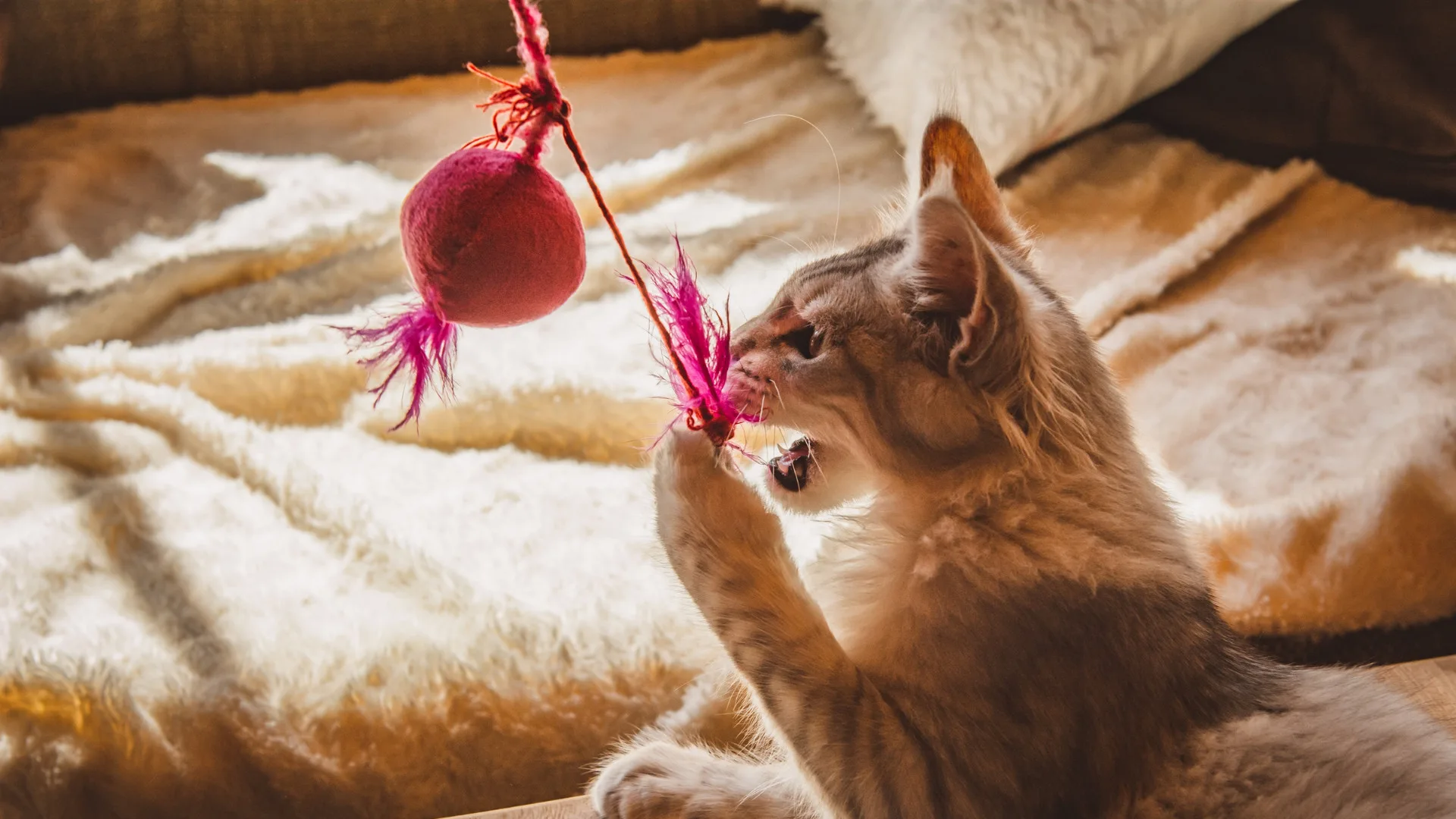
Play is a natural and essential part of a cat’s life. It supports physical development, strengthens coordination and provides an outlet for normal hunting behaviours.
Regular play also helps prevent boredom, reduces the risk of behavioural problems and supports a healthy body weight, particularly for cats without outdoor access.
For kittens, play is especially important.
In their early weeks, playing with littermates helps them:
As kittens grow (from around 14 weeks onwards), their play becomes more focused on objects. They stalk, pounce, bat, grasp and bite; behaviours that mirror natural hunting instincts.
For adult cats, play continues to be valuable for mental stimulation, exercise and strengthening the bond between cat and owner.

Short, frequent play sessions are more beneficial than a single long session. This mirrors a cat’s natural activity pattern of short bursts of hunting followed by rest.
When playing:
These are excellent for encouraging stalking and pouncing. Keep movements low and realistic rather than lifting the toy high into the air, which may encourage unsafe jumping.
Store stringed toys safely after use to prevent entanglement or chewing.
Cats naturally enjoy climbing and observing from height. Multi-level scratching posts provide:
Scratching supports claw health and muscle stretching. The taller and sturdier the post, the better.
Although pet cats do not need to hunt for food, feeding can be made more stimulating.
These activities provide both physical and mental engagement.
Boxes, tunnels and enclosed beds allow cats to hide and pounce; behaviours rooted in natural predation. These spaces also offer privacy when your cat needs to rest.
Simple reward-based training sessions can provide mental enrichment. Keep sessions brief and positive and never force participation.
