

The pancreas is an organ located near the stomach that plays an important role in digestion and blood sugar control.
Pancreatitis is the term used when the pancreas becomes inflamed. This inflammation can cause significant abdominal pain, vomiting and general illness. The condition can be mild and settle with treatment, or it can be severe and potentially life threatening.
Treatment focuses on supportive care, including pain relief, medication to control nausea and, in more serious cases, intravenous fluids and hospitalisation. Pancreatitis can affect any dog, but it is particularly common in the Miniature Schnauzer.
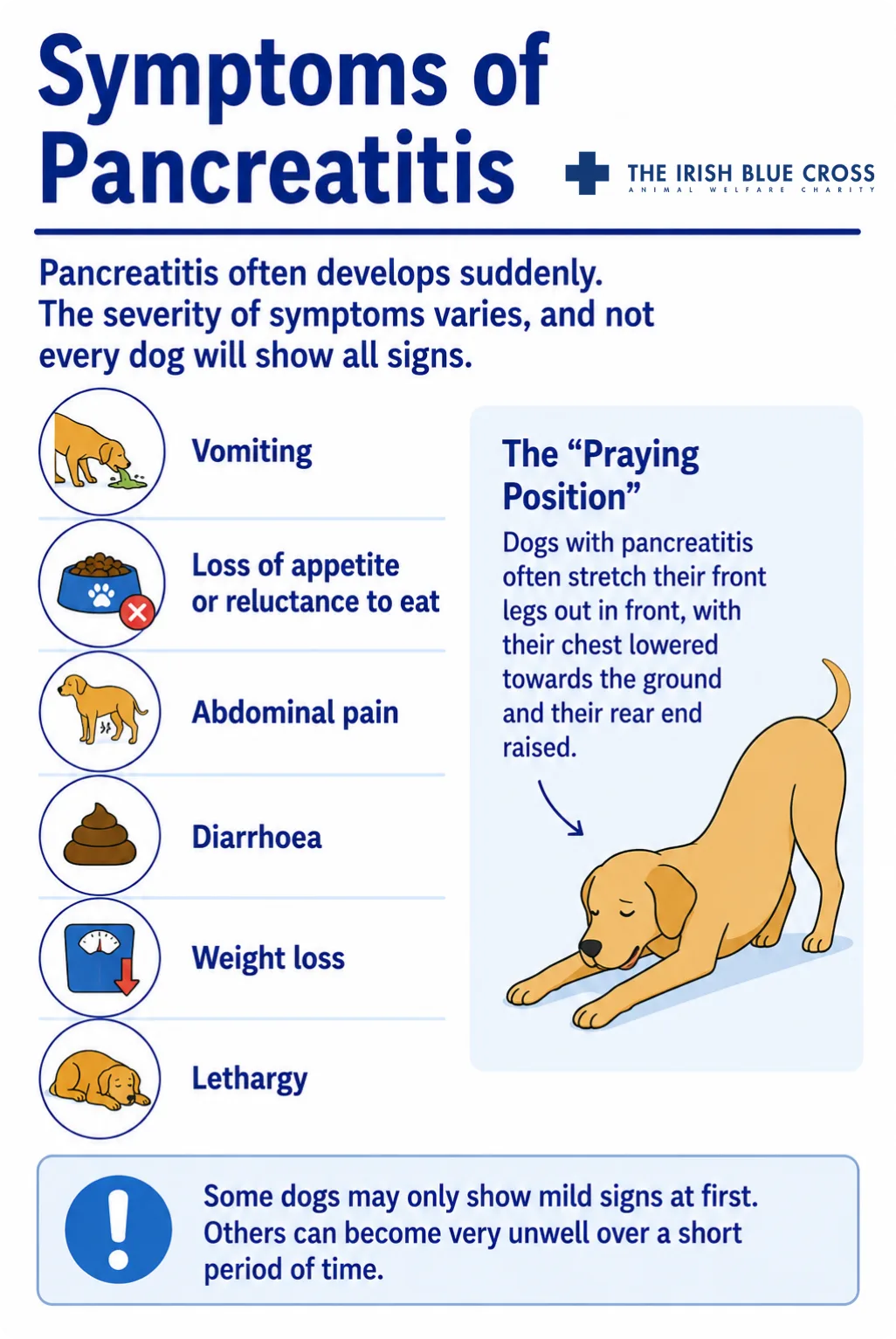
Contact your vet as soon as possible if your dog shows signs of pancreatitis, especially if they have had the condition before.
Untreated pancreatitis can worsen quickly and may lead to serious complications. If you are concerned about your dog’s health, it is always safest to seek veterinary advice.

Your vet will carry out a full examination and may recommend tests such as blood work or abdominal imaging to support the diagnosis.
Treatment depends on severity.
Early treatment greatly improves the chances of recovery.
Many dogs recover well with prompt veterinary care. However, some may experience repeat episodes during their lifetime.
In rare cases, pancreatitis can damage the pancreas enough to contribute to diabetes.
If your dog has had pancreatitis before, steps can be taken to reduce the risk of recurrence:
Pancreatitis can involve hospital treatment and ongoing management. If you’re able to, consider pet insurance while your dog is young and healthy to help with unexpected illness or injury. If your dog becomes unwell, talk openly with your vet about the options, the likely costs, and what feels manageable for you. Together, you can tailor a plan that’s right for your dog and your situation.
If you suspect pancreatitis, please contact your local veterinary practice as soon as possible as early intervention offers the best possible outcome.