

Introducing a new puppy to a resident dog is an exciting moment, but it is important to handle the introduction carefully. A calm and well-managed first meeting can help both dogs feel comfortable and set the foundation for a positive relationship.
Taking a little time to prepare your home and manage early interactions will make the transition smoother for both your puppy and your adult dog.
Before bringing your puppy home, it is helpful to organise your environment so both dogs have their own space.
Each dog should have their own bed, food and water bowls and quiet resting area.
Keeping these resources separate in the beginning can prevent competition and allow both dogs time to adjust to the new situation.
Before the first introduction, remove toys, chews and food bowls from shared areas. These items can sometimes cause tension between dogs, especially during early meetings when they are still unfamiliar with each other.
Young puppies are more vulnerable to infections. For this reason, it is important to ensure your resident dog’s vaccinations are up to date before bringing a new puppy into the home.
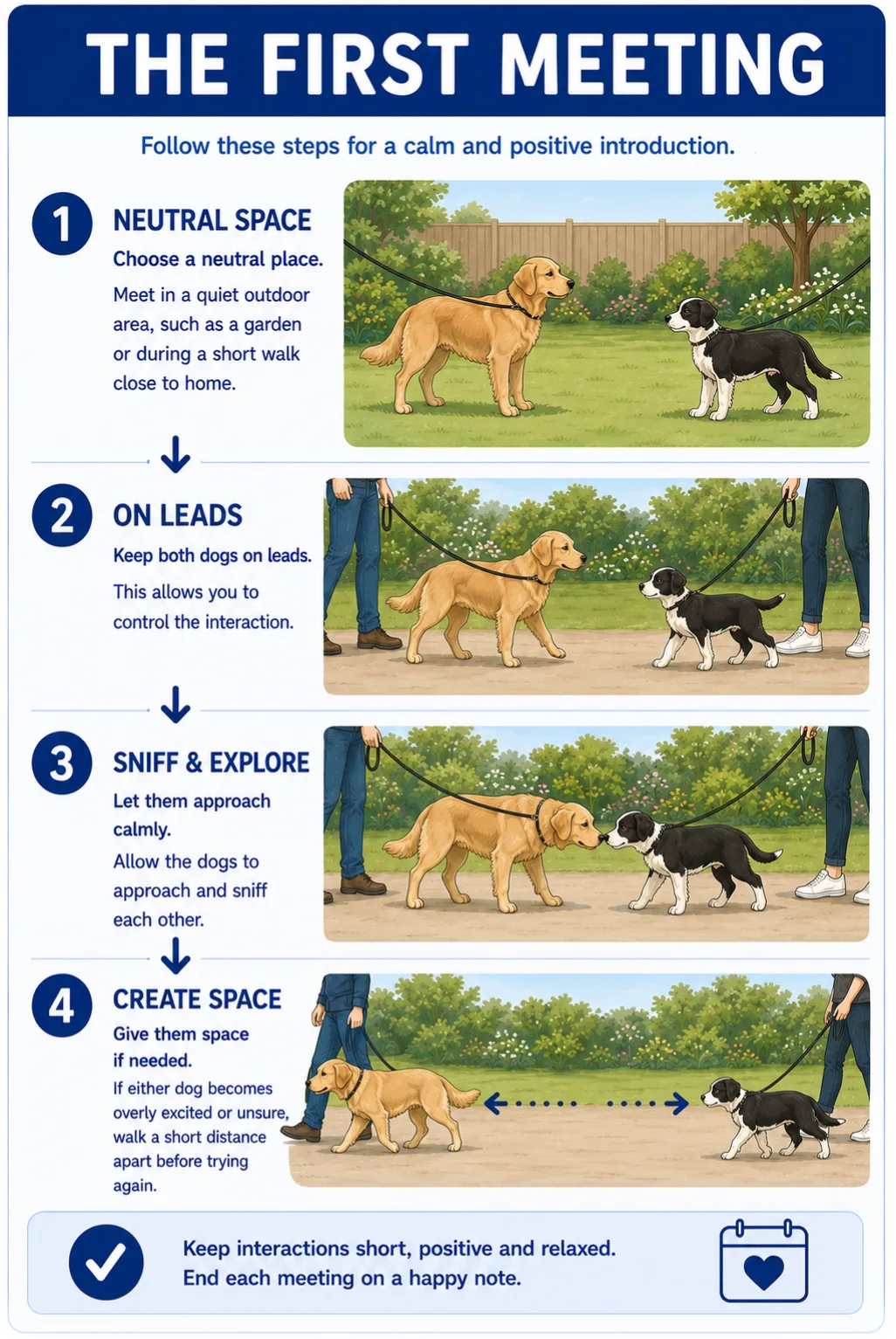
After the initial meeting, you can bring both dogs into the home together. Leaving lightweight house leads attached can make it easier to separate them calmly if necessary.
During the first few days, it is helpful to supervise interactions closely.
Young puppies often want to play frequently and may pester an older dog who is not always interested. If play becomes too intense, calmly separate them and redirect the puppy’s attention elsewhere.
Using a baby gate or similar barrier can be very helpful during the early stages. This allows the dogs to see and smell each other while still having space apart when needed.
Providing opportunities for each dog to rest without being disturbed is important for maintaining a positive relationship.
It is important to supervise interactions between your puppy and adult dog until you are confident that they are comfortable together.
Most dogs adjust well over time, but the process can take days or even weeks depending on the personalities of the dogs involved.
By introducing them slowly and ensuring that early interactions are calm and positive, you can help build a strong and healthy relationship between your new puppy and your existing dog.