
Pet Loss Support Helpline – call 1800 83 99 54 for support and guidance, or find out more.

How to Recognise Pain in Cats

Being able to spot signs of pain in your cat can make a real difference. Cats often hide discomfort, so changes can be subtle and easy to miss. Noticing these early signs means your cat can get the care they need sooner.

If you think your cat may be in pain, contact your vet straight away. Never give your cat human pain relief, as this can be extremely dangerous.

Why Pain Can be Hard to Spot in Cats

Cats are naturally good at masking pain. This behaviour comes from their instincts and means that conditions such as arthritis or dental disease may not be obvious until discomfort becomes severe. For this reason, it’s important to pay attention to small changes in their behaviour or movement.
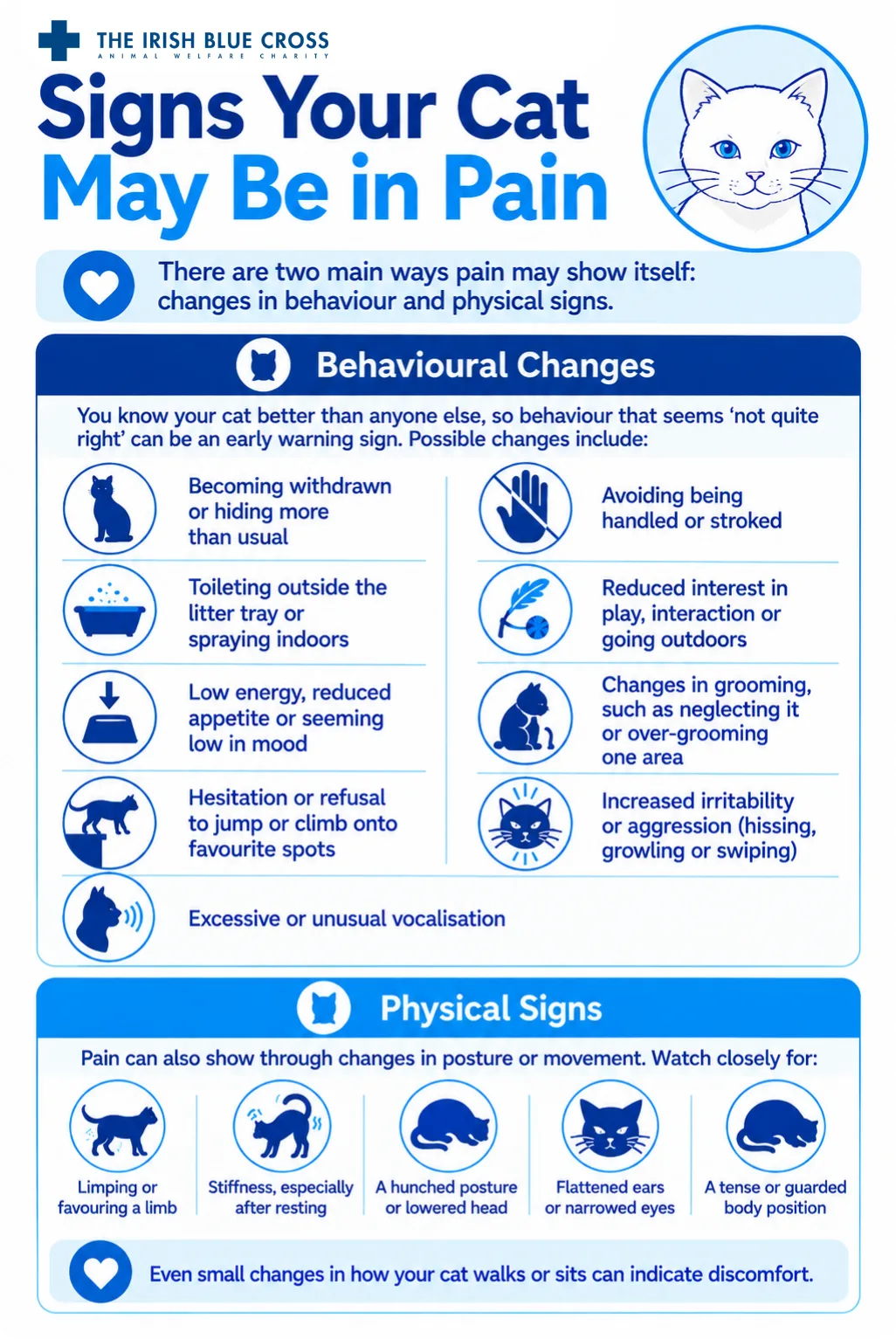
Signs Your Cat May Be in Pain There are two main ways pain may show itself: changes in behaviour and physical signs. Behavioural Changes You know your cat better than anyone else, so behaviour that seems 'not quite right' can be an early warning sign. Possible changes include: Becoming withdrawn or hiding more than usual Avoiding being handled or stroked Toileting outside the litter tray or spraying indoors Reduced interest in play, interaction or going outdoors Low energy, reduced appetite or seeming low in mood Changes in grooming, such as neglecting it or over-grooming one area Hesitation or refusal to jump or climb onto favourite spots Increased irritability or aggression (hissing, growling or swiping) Excessive or unusual vocalisation Physical Signs Pain can also show through changes in posture or movement. Watch closely for: Limping or favouring a limb Stiffness, especially after resting A hunched posture or lowered head Flattened ears or narrowed eyes A tense or guarded body position Even small changes in how your cat walks or sits can indicate discomfort.

Types of Pain in Cats

Sudden (Acute) Pain

Acute pain develops quickly and usually has an obvious cause, such as an injury, infection or accident. It may last from a few hours to a few days but still requires veterinary assessment.

Long-Term (Chronic) Pain

Chronic pain develops gradually or persists over time. Conditions such as arthritis are common in older cats and can significantly affect mobility and quality of life. While these conditions may not be curable, pain can often be managed effectively with veterinary support.

What to Do if You Think Your Cat is in Pain

If you are concerned that your cat is uncomfortable or in pain, contact your vet as soon as possible.

Your vet will examine your cat, identify the cause and recommend appropriate treatment.

If your cat has been injured:

  • Keep them as calm and still as possible
  • Handle gently and avoid touching painful areas
  • Use a blanket for comfort if needed

Always transport your cat securely in a padded carrier to prevent further injury.
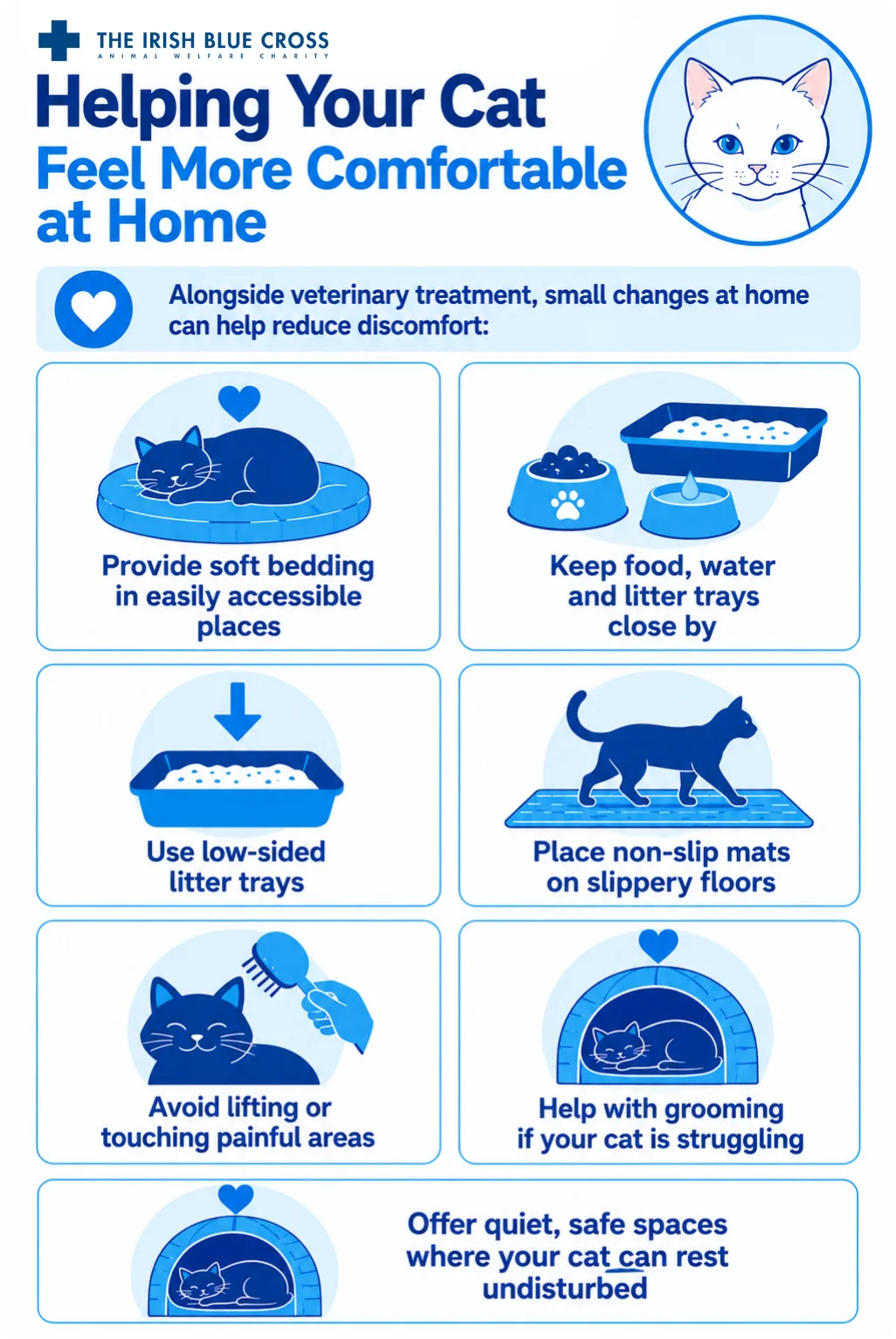
Helping Your Cat Feel More Comfortable at Home Alongside veterinary treatment, small changes at home can help reduce discomfort: Provide soft bedding in easily accessible places Keep food, water and litter trays close by Use low-sided litter trays Place non-slip mats on slippery floors Avoid lifting or touching painful areas Help with grooming if your cat is struggling Offer quiet, safe spaces where your cat can rest undisturbed

Ongoing Care

Pain levels can change over time. If your cat’s symptoms worsen, or if prescribed medication seems less effective, contact your vet promptly. Regular check-ups are especially important for older cats.


Share

Share: