
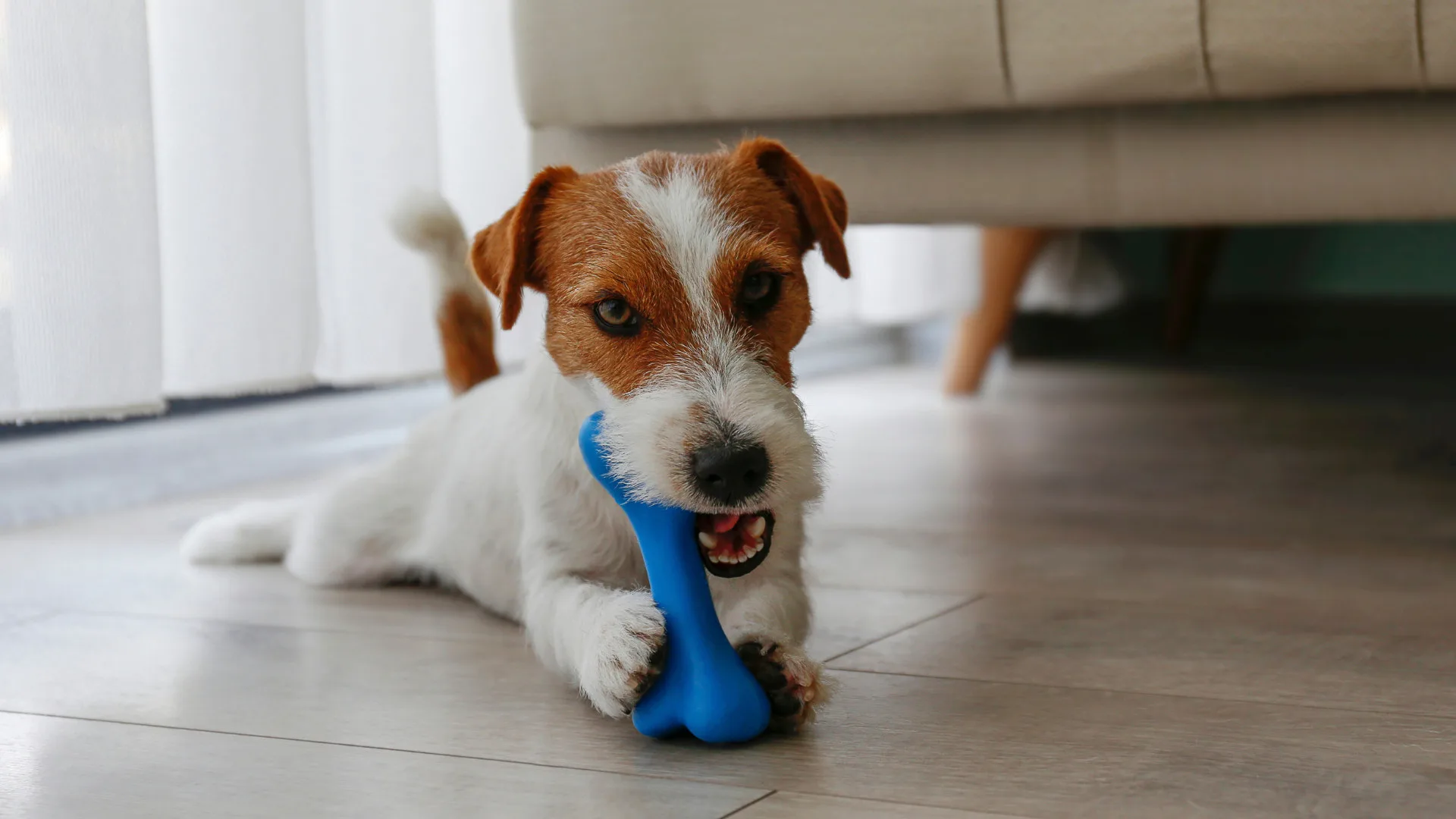
Chewing is a natural and important behaviour for dogs. Almost all dogs enjoy chewing to some degree, although some breeds and individuals have a stronger urge than others. Puppies and adolescent dogs tend to chew the most as they explore their surroundings and develop their adult teeth.
Unlike humans, dogs do not use hands to investigate objects, they use their mouths to explore the world around them. Picking up and chewing items is one of the main ways they learn about their environment.
Although the intensity of chewing often decreases as a dog matures, most dogs continue to chew throughout their lives. Chewing can provide enjoyment, help exercise the jaw muscles and contribute to dental health.
The amount a dog needs to chew varies, depending on their age, personality and breed type. For example, some breeds such as Labrador Retrievers and Staffordshire Bull Terriers are known for having particularly strong chewing instincts.
Because chewing is such a natural behaviour, it is important to provide dogs with safe and appropriate items that allow them to satisfy this need.

Dogs that are left alone for long periods or do not receive enough exercise and stimulation may start chewing household items out of boredom.
This type of chewing is often directed at furniture, shoes or other belongings simply because they are available.
Dogs quickly learn how their actions influence their owners. If chewing an item such as a remote control leads to people chasing them or reacting strongly, the dog may repeat the behaviour to gain attention.
Occasionally, chewing unusual items such as stones or plaster may indicate that a dog’s diet is not properly balanced. Dogs should always be fed a ‘complete diet’ appropriate for their age, health and activity level.
If you are concerned about your dog’s diet, please speak with your veterinary practice for advice.
Some dogs chew destructively when they experience stress or anxiety while left alone. This may be linked to separation-related behaviours and often requires behaviour support alongside environmental management.
Because chewing is such a natural behaviour, dogs should always have access to safe items designed for chewing.
These may include:
Rotating toys regularly can help maintain your dog’s interest and prevent boredom. Introducing new items occasionally also provides novelty and enrichment.
Puppies and young dogs often need guidance to learn what is appropriate to chew.
Here are some helpful strategies:
Keep valuable or dangerous objects out of your dog’s reach. Shoes, wallets, remote controls and similar items can easily become targets if they are accessible.
Managing the environment reduces the chances of your dog developing unwanted chewing habits.
If you notice your dog chewing something inappropriate, calmly redirect their attention to a suitable chew toy.
Once they begin chewing the correct item, praise them calmly to reinforce the behaviour you want.
Punishing a dog for chewing can create fear and confusion. Dogs may begin hiding their chewing behaviour rather than learning what is appropriate.
Positive redirection and management are far more effective and help maintain trust between you and your dog.
When selecting chew toys or chew treats, safety is essential.
Safe chew toys should be:
Very hard items like antlers can sometimes damage teeth, so toys should ideally have a little flexibility when pressed.
Chew treats should also be chosen carefully. Some items such as cooked bones or certain rawhide products can splinter or break into large pieces that may cause choking or intestinal blockages.
Always supervise your dog when introducing a new chew and remove it if it becomes damaged.
If your dog regularly chews inappropriate items, it is helpful to consider the underlying cause.
Increasing daily exercise, providing more enrichment activities and ensuring your dog has suitable chew toys can often reduce unwanted chewing.
If chewing appears excessive, sudden or linked to anxiety, it is advisable to speak with your veterinary practice. They can rule out medical issues and provide guidance or refer you to an accredited behaviour professional if needed.
Chewing is an important and enjoyable activity for dogs. When managed properly, it provides mental stimulation, emotional comfort and a healthy outlet for natural behaviour.
By offering safe chew items, supervising your dog and guiding them towards appropriate choices, you can help protect your belongings while supporting your dog’s