
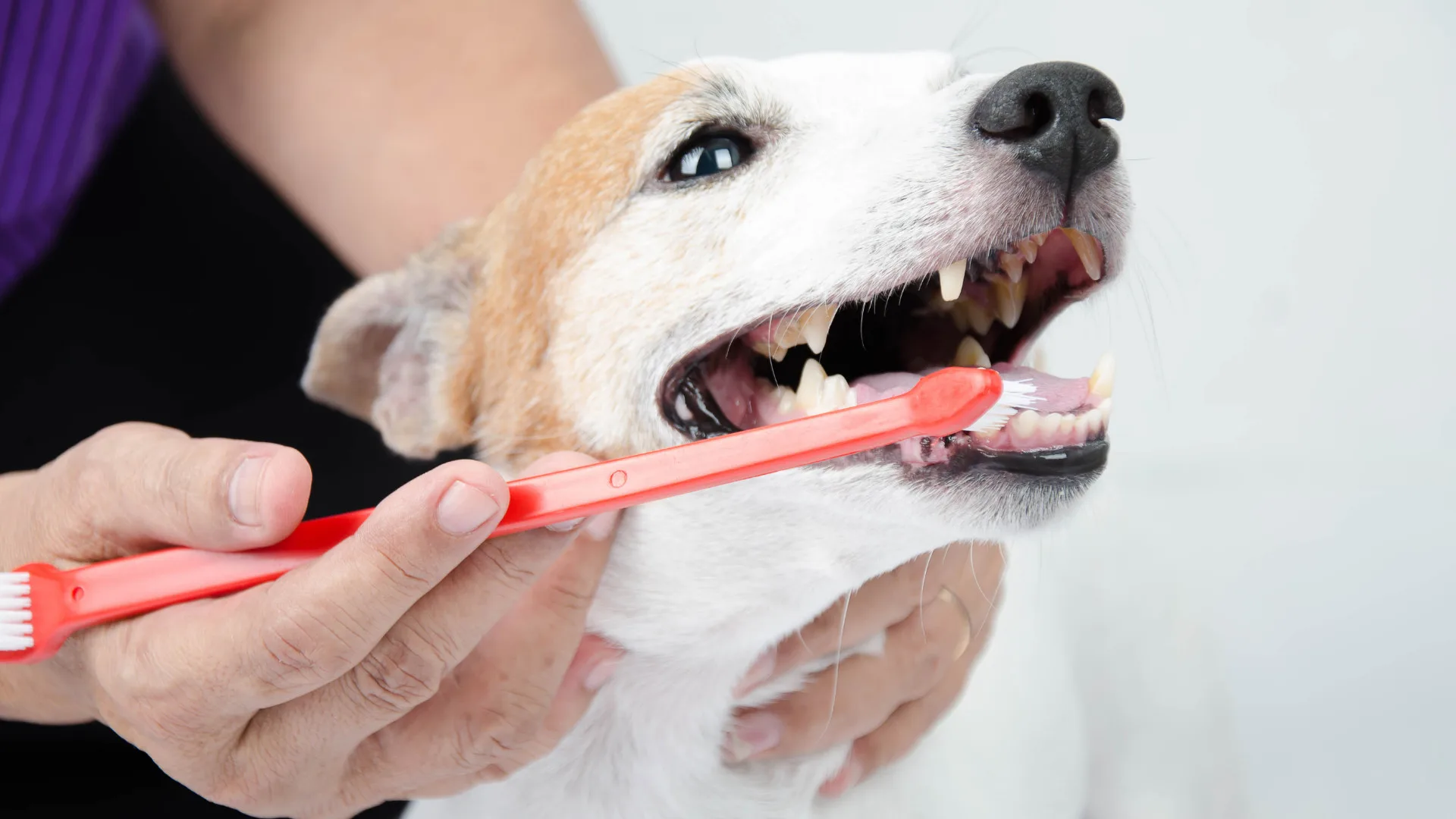
Keeping your dog’s teeth clean is an important part of caring for their overall health. With regular dental care, you can help prevent painful problems later in life. Simple steps such as daily tooth brushing, offering a suitable diet and using appropriate dental chews, all play a role in reducing plaque and keeping your dog’s mouth healthy.
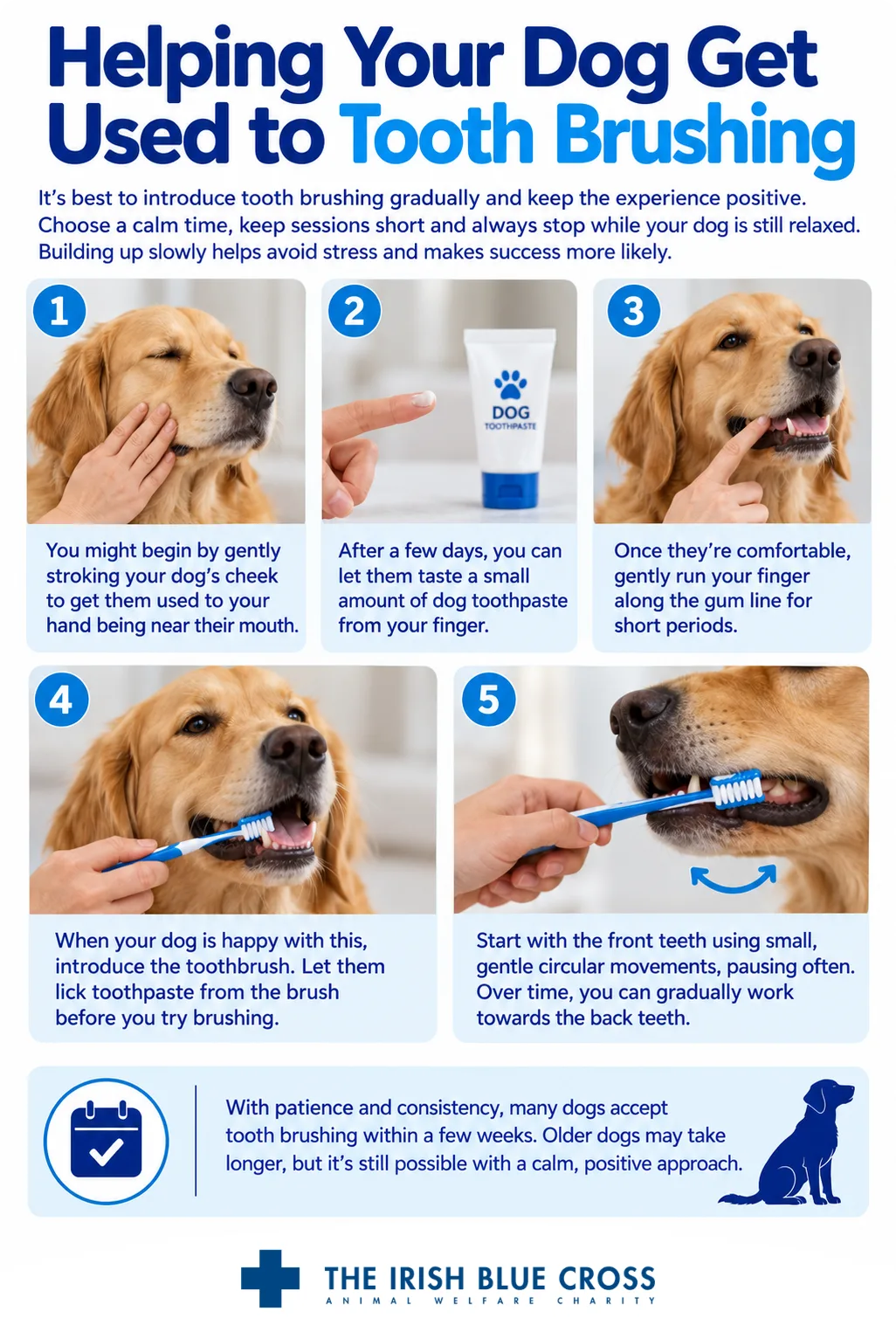
If your dog isn’t used to having their teeth brushed, don’t worry; most dogs need time to get comfortable with it. With patience, gentle handling and positive training, many dogs learn to accept brushing as part of their routine.
Dogs rely on their mouths for far more than just eating. They use them to play, explore and interact with the world around them. When teeth aren’t cleaned regularly, a soft film called plaque builds up on the surface. Over time, this hardens into tartar, which looks brown and gritty and clings firmly to the teeth.
Tartar irritates the gums and can make them sore and inflamed. This can cause pain when your dog eats and, if left untreated, may lead to dental disease and tooth loss.
Looking after your dog’s teeth helps to prevent discomfort and supports their long-term wellbeing.
Dental problems can be easy to miss at first, so it’s important to watch for changes. Common signs include:
If you notice any of these signs, contact your vet for advice. Some dogs may need professional dental cleaning, and in more severe cases, damaged teeth may need to be removed.
Preventing dental problems is far easier than treating them. Daily brushing is the most effective way to keep plaque under control. Use a dog-specific toothbrush or a soft rubber finger brush, along with toothpaste made especially for dogs.
Dog toothpaste comes in flavours like chicken or beef, which many dogs enjoy. Human toothpaste should never be used, as it contains ingredients that can be harmful if swallowed.
Dental chews and specially formulated diets can also help reduce plaque. It’s important to choose chews that are the right size for your dog, as very small chews can be a choking risk. Hard chews may damage teeth, and many dental treats are high in calories, so you will need to adjust your dog’s food to prevent weight gain.
Your vet can advise whether a dental diet is suitable for your dog and help you choose safe products.
If your dog already has visible tartar, sore gums or signs of mouth pain, brushing may be uncomfortable for them. Speak to your vet before starting a brushing routine so you can get the right advice for your dog’s needs.
There are many products that claim to improve dental health, including chews, rinses and supplements. While some may help a little, regular tooth brushing remains the most effective way to protect your dog’s teeth and gums.
If you’re ever unsure about your dog’s dental health or how to care for their teeth, your vet or vet nurse will be happy to guide you. Looking after your dog’s mouth is an investment in their comfort, health and happiness for years to come.