

Cystitis means inflammation of the bladder. When no infection, stones or other medical cause can be found, the condition is called Feline Idiopathic Cystitis (FIC).
FIC is one of the most common urinary problems seen in cats and it can cause significant pain and discomfort. Many cats experience repeated episodes over their lifetime.
FIC is not the same as a bladder infection, although the symptoms can look very similar.
The exact cause of FIC is still not fully understood, but stress is thought to be the most important trigger.
In cats affected by FIC, stress can disrupt the protective lining of the bladder. This allows urine to inflame the bladder wall and cause pain. Even changes that seem minor to us can be stressful for some cats.
Common stress triggers include:
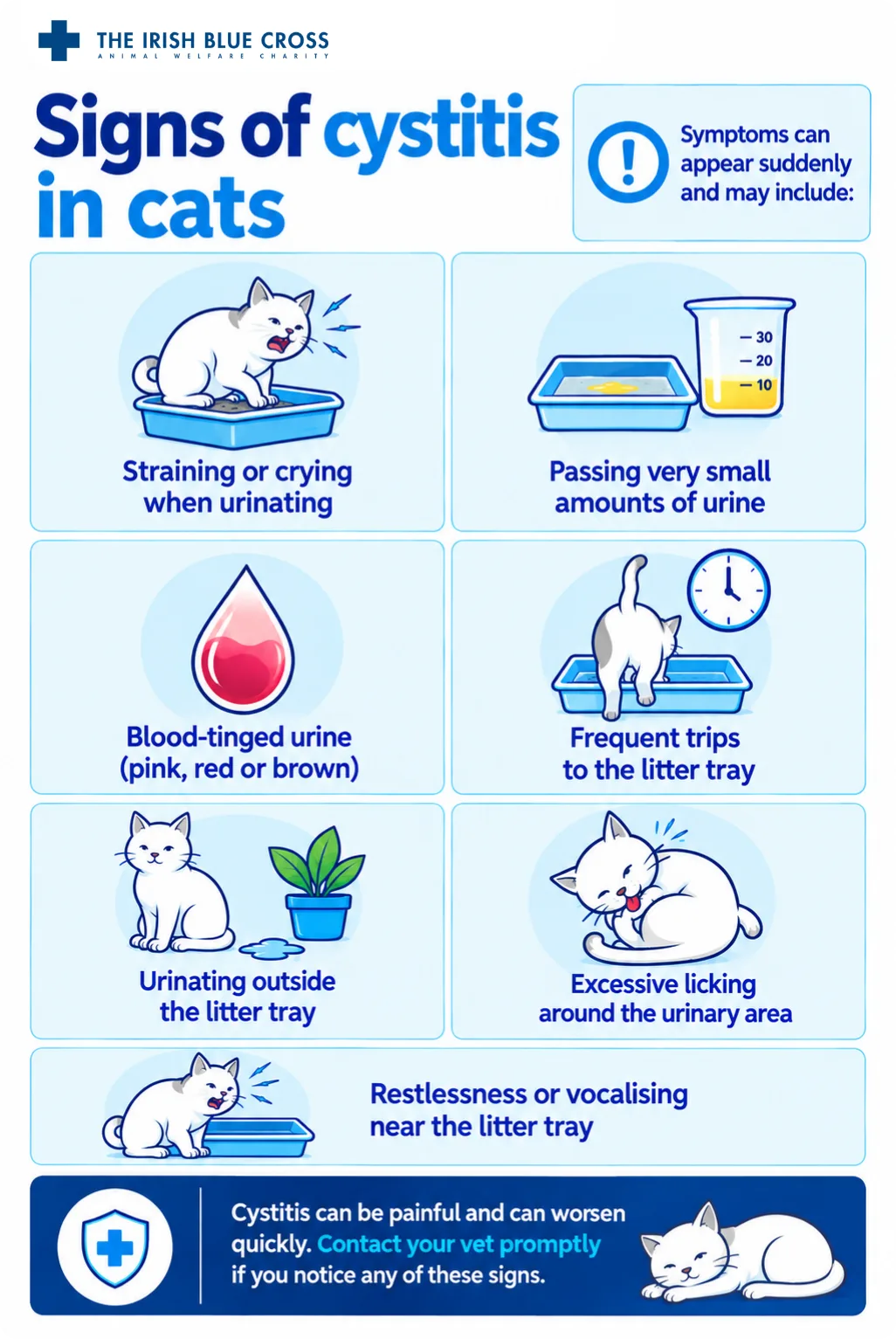
If your cat is repeatedly trying to urinate but producing no urine, please seek veterinary help immediately. This may indicate a blocked bladder, which is life-threatening.
As there is no single test that confirms FIC, diagnosis is made by ruling out other causes of urinary disease.
Your vet may:
If no other cause is found and the symptoms fit, a diagnosis of FIC is usually made.
Treatment focuses on relieving pain during flare-ups and reducing the risk of future episodes.
Short-term treatment may include:
Long-term management is centred on stress reduction and lifestyle changes, which are often the most effective way to control the condition.
Never give your cat medication unless it has been prescribed specifically for them by a vet.
Small changes at home can make a big difference to cats with FIC.
Diluted urine is less irritating to the bladder.
FIC can affect any cat, but it is more commonly seen in:
Male cats with cystitis are at risk of developing a urinary blockage, where urine cannot pass from the bladder. This causes toxins to build up in the body and can be fatal if not treated quickly.
Additional warning signs may include:
Blocked bladders require immediate veterinary treatment, often involving catheterisation and hospital care.
Most cats with FIC can live long, comfortable lives with the right care. Flare-ups may occur from time to time, but these are often manageable with prompt veterinary treatment and good home management.
If symptoms persist, worsen, or return frequently, ongoing veterinary support is essential.
Because FIC can be a lifelong condition, costs can add up, particularly if complications occur.
If you’re able to, consider pet insurance while your cat is young and healthy to help with unexpected illness or injury. If your cat becomes unwell, talk openly with your vet about the options, the likely costs, and what feels manageable for you. Together, you can tailor a plan that’s right for your cat and your situation.