
Pet Loss Support Helpline – call 1800 83 99 54 for support and guidance, or find out more.

Caring for Cats in Winter

Cold weather can bring extra risks for cats. As temperatures drop, it’s important to take steps to keep your cat warm, safe and comfortable.

Do Cats Feel the Cold?

Yes, cats can feel the cold, particularly during prolonged cold spells. In very low temperatures, cats are at risk of hypothermia and frostbite.

Some cats are more vulnerable than others, including:

  • Kittens and older cats
  • Cats with underlying health conditions
  • Hairless or short-haired breeds, such as the Sphynx or Devon Rex

These cats may need extra warmth and closer monitoring during winter.
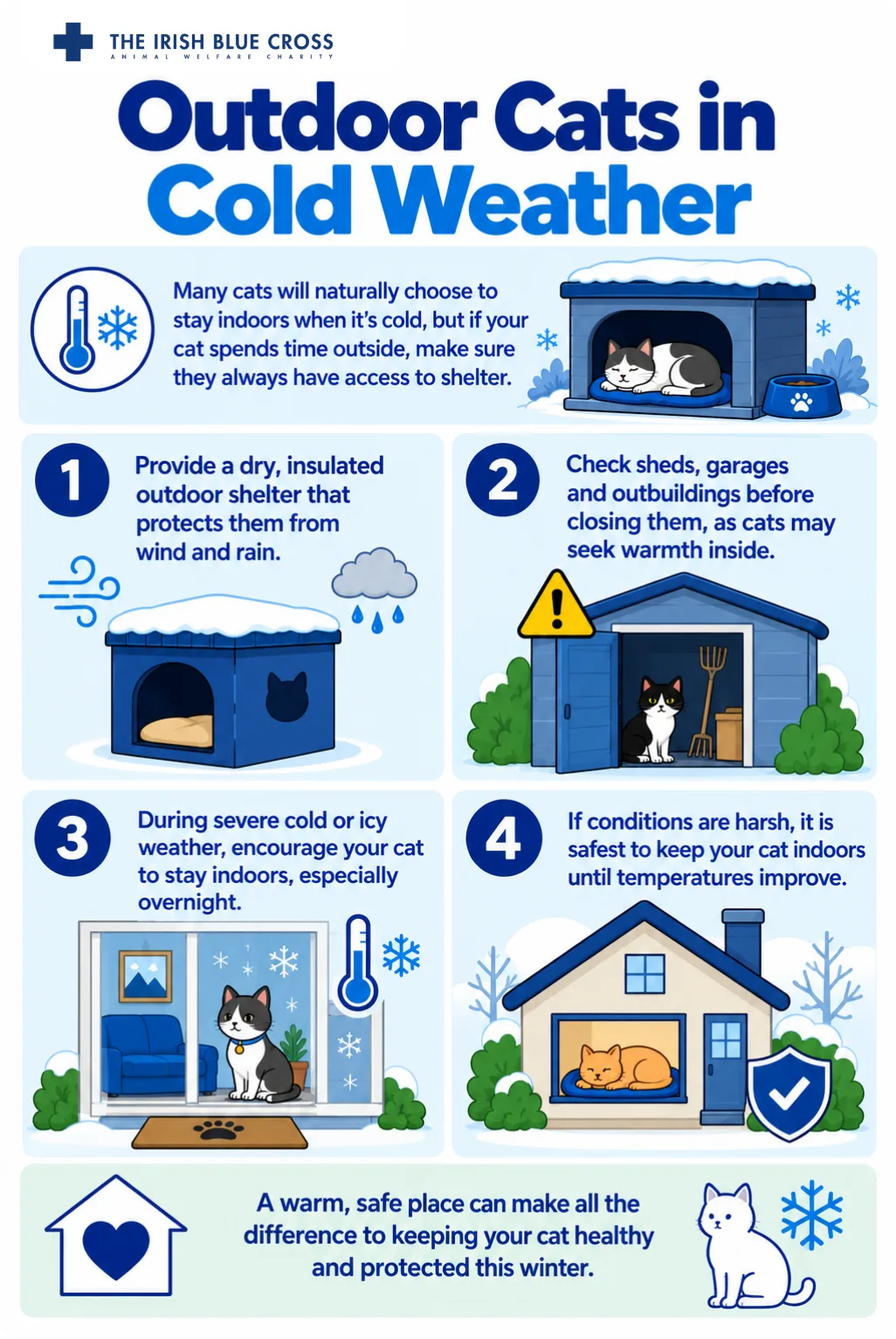
Infographic titled “Outdoor Cats in Cold Weather” explaining how to keep cats safe during cold weather. It advises providing a dry, insulated outdoor shelter protected from wind and rain; checking sheds, garages and outbuildings before closing them because cats may seek warmth inside; encouraging cats to stay indoors during severe cold or icy weather, especially overnight; and keeping cats indoors when conditions are harsh until temperatures improve. The graphic concludes that providing a warm, safe place helps keep cats healthy and protected during winter.

Keeping Your Cat Warm Indoors

Even indoor cats can feel the chill in winter.

You can help by:

  • Providing warm beds and blankets in quiet, draught-free areas
  • Offering extra cosy sleeping spots, raised off cold floors
  • Moving your cat to warmer rooms at night
  • Making sure they have access to an indoor litter tray when it’s too cold to go outside
  • Gently drying your cat if they come in wet from rain or snow

Pet-safe microwavable heat pads placed under blankets can help keep beds warm. Avoid electric blankets, as these can cause burns or pose a chewing hazard.

When Should Cats Stay Inside?

Winter brings additional outdoor dangers, including:

  • Cats sheltering under car bonnets or inside engines for warmth
  • Reduced visibility on dark evenings, increasing the risk of road accidents
  • Cats becoming trapped during sudden weather changes without food or water

Always check under the bonnet and give it a firm tap before starting your car. If very cold or stormy weather is forecast, it’s safest to keep your cat indoors and not leave them outside overnight.

Keeping Your Cat Active Indoors

Cold weather may limit outdoor activity, which can leave cats bored or restless. Indoor enrichment is important to keep them mentally and physically stimulated.

  • Offer toys, puzzle feeders and climbing opportunities
  • Schedule regular play sessions
  • Rotate toys to keep them interesting

Staying active indoors can also help your cat keep warm during colder days.

Antifreeze Poisoning in Cats

Antifreeze is extremely dangerous to cats. Even a tiny amount can cause severe kidney damage and can be fatal.

Cats may be exposed by:

  • Walking through spills and licking it off their paws or fur
  • Drinking from contaminated puddles

You can reduce the risk by:

  • Using pet-safe antifreeze products or avoiding antifreeze where possible
  • Cleaning up spills immediately and thoroughly
  • Keeping containers sealed and out of reach
  • Wiping your cat’s paws and coat if they’ve been outside near vehicles

Signs of antifreeze poisoning in cats

Signs can appear quickly and may include:

  • Vomiting
  • Lethargy or drowsiness
  • Unsteady walking
  • Seizures
  • Difficulty breathing

If you suspect antifreeze exposure, contact your vet immediately. Do not wait for symptoms to appear, as early treatment is critical.

Snow, Ice and Road Grit

During snowy or icy weather, roads and paths are often treated with salt or grit. These substances can irritate paws and are toxic if swallowed.

  • Gently clean your cat’s paws when they come indoors
  • Check cat flaps regularly, as snow or ice can block them
  • Ensure your cat can always get back inside

Festive and Seasonal Hazards

Winter and festive decorations can bring additional risks:

  • Plants such as lilies, poinsettia, holly and mistletoe are toxic to cats
  • Tinsel, string and decorations can cause choking or intestinal blockages if swallowed

Please contact your vet immediately if you think your cat has eaten something dangerous.

Share

Share: