
Canine cough, also known as kennel cough, is a common respiratory infection in dogs that causes a distinctive, harsh cough. While it can sound alarming, most dogs recover well with rest and basic care. However, some dogs are more vulnerable to complications, so it’s important to know when to seek veterinary advice and how to reduce the risk of spread.
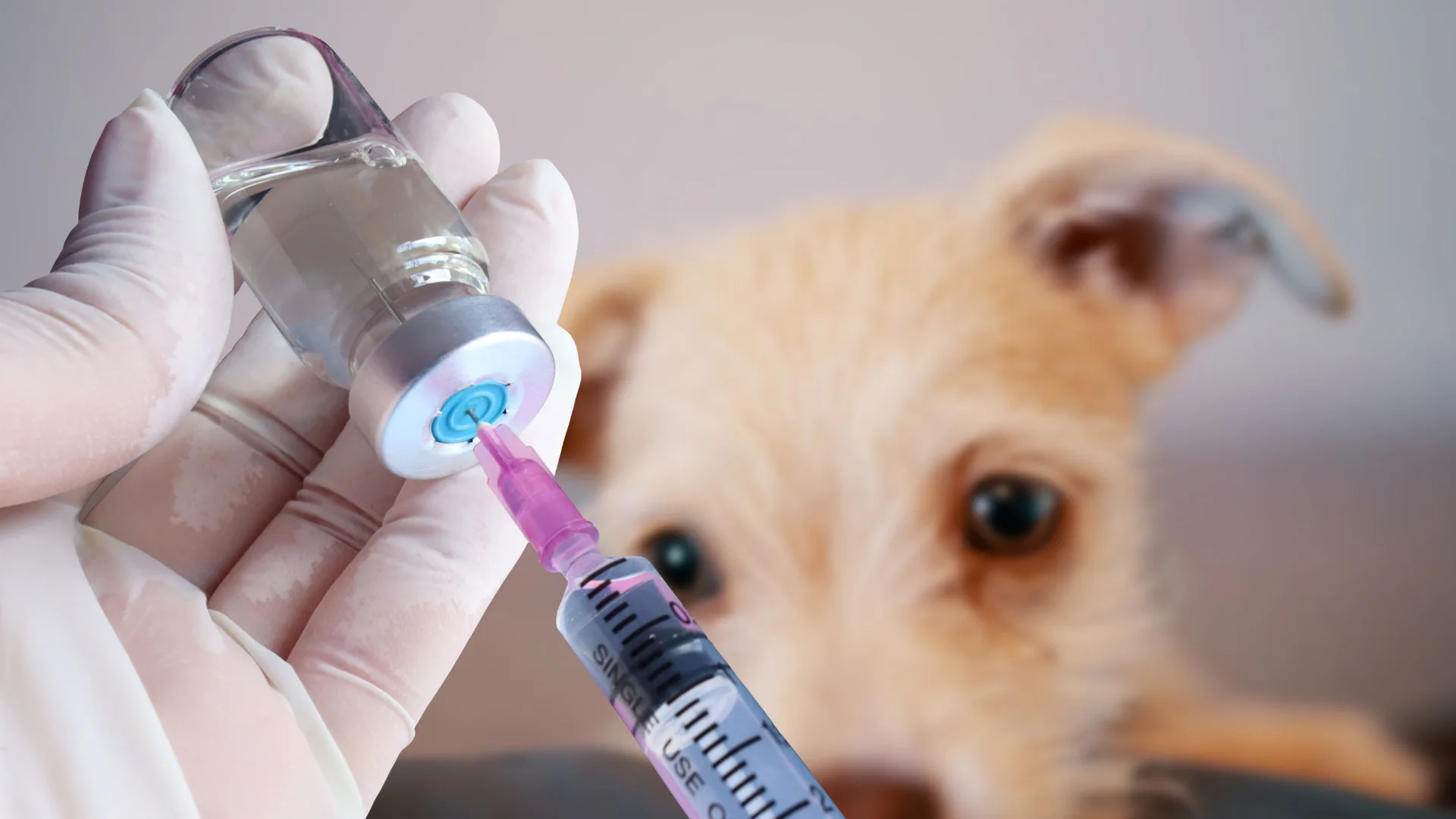
Vaccination is the most effective way to reduce the risk of kennel cough, particularly for dogs that mix regularly with others.

Most dogs with kennel cough remain bright, alert and interested in food. In mild cases, coughing may be the only sign.
Some dogs may also develop a runny nose, sneezing or mild eye discharge.
More vulnerable dogs, such as puppies, older dogs, or those with existing health problems, may show more concerning signs, including:
In healthy adult dogs, kennel cough is usually mild and self-limiting, meaning it clears on its own within a few weeks. However, in higher-risk dogs, the infection can occasionally progress to more serious conditions such as pneumonia.
If your dog seems unwell, stops eating, or their cough worsens rather than improves, please contact your vet.
Kennel cough is highly contagious and spreads easily via:
The incubation period (time between exposure and symptoms) is usually two to fourteen days, with some dogs being asymptomatic (showing no signs).
While there is no single test for kennel cough. Vets usually diagnose it based on your dog’s symptoms and recent contact with other dogs.
In more severe or complicated cases, further tests such as swabs or X-rays may be recommended.
If your dog is coughing and needs to visit a veterinary clinic, it’s important to let the practice know in advance, so steps can be taken to reduce the risk of spreading infection to other dogs.
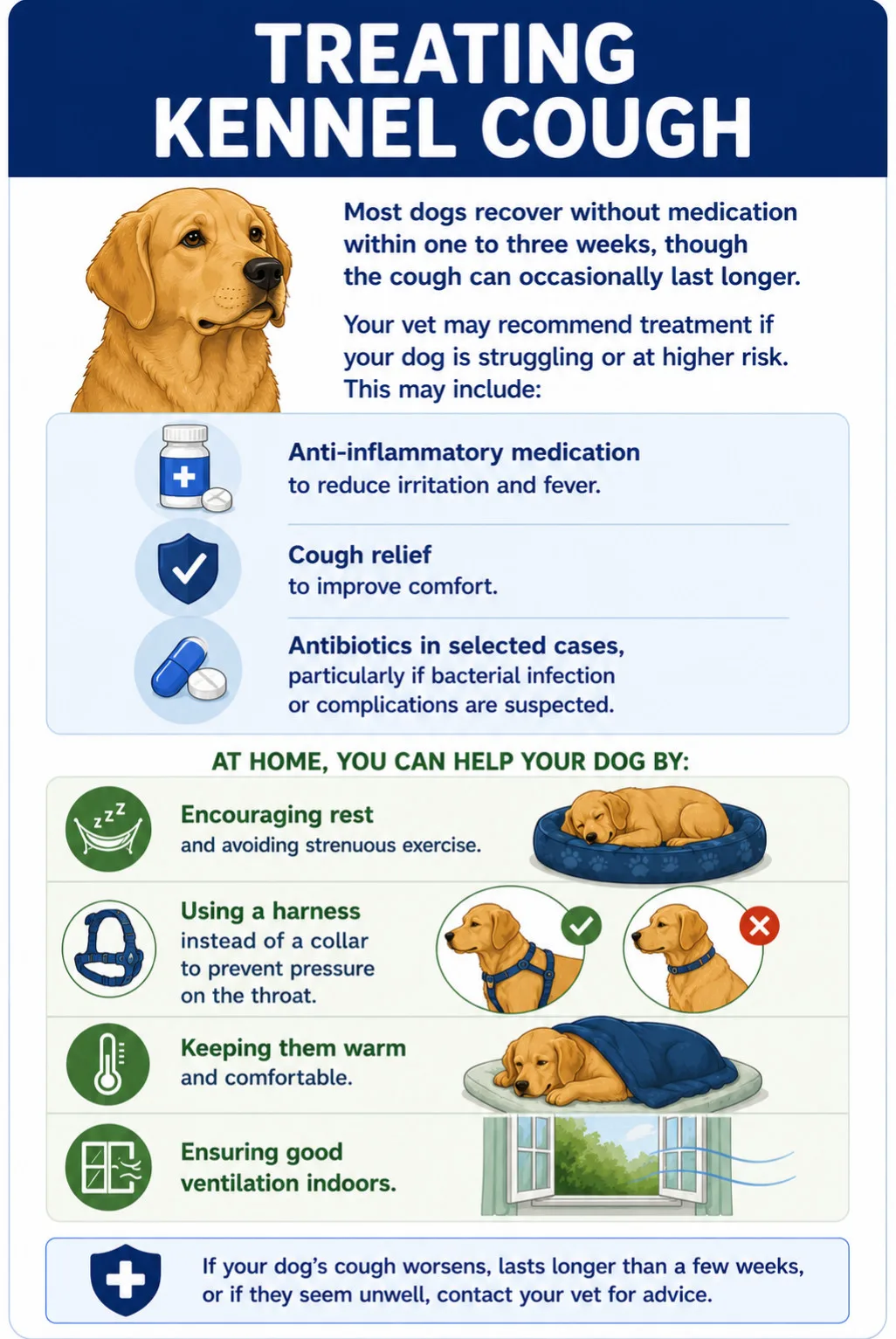
Dogs with kennel cough should be kept away from other dogs and public spaces while they are coughing and for two to three weeks after symptoms resolve, as they can remain contagious.
Vaccination is the most effective way to reduce the risk of kennel cough, particularly for dogs that mix regularly with others.
The kennel cough vaccine usually lasts around 12 months. While it does not guarantee full protection, it can significantly reduce the severity and duration of illness.
It’s important to note that many training class providers, boarding kennels and day care facilities usually require proof of vaccination against kennel cough.
The vaccine can be given as part of your dog’s routine healthcare plan, please speak to your vet about whether it’s appropriate for your dog’s lifestyle.
Contact your vet for advice if:
Early advice can help prevent complications and ensure your dog recovers as smoothly as possible.
Kennel cough is usually more unpleasant than dangerous, but understanding how it spreads and how to manage it helps protect both your dog and others in the community.