
Pet Loss Support Helpline – call 1800 83 99 54 for support and guidance, or find out more.

Buster Collar, Inflatable Collar, Recovery Suit or Boots?

After surgery or an injury, your dog may need protection to stop them licking, chewing or scratching a wound. There are several options available, and the best choice depends on your dog’s size, temperament and where the wound is located.

Your veterinary team are best placed to advise which is best for your dog.
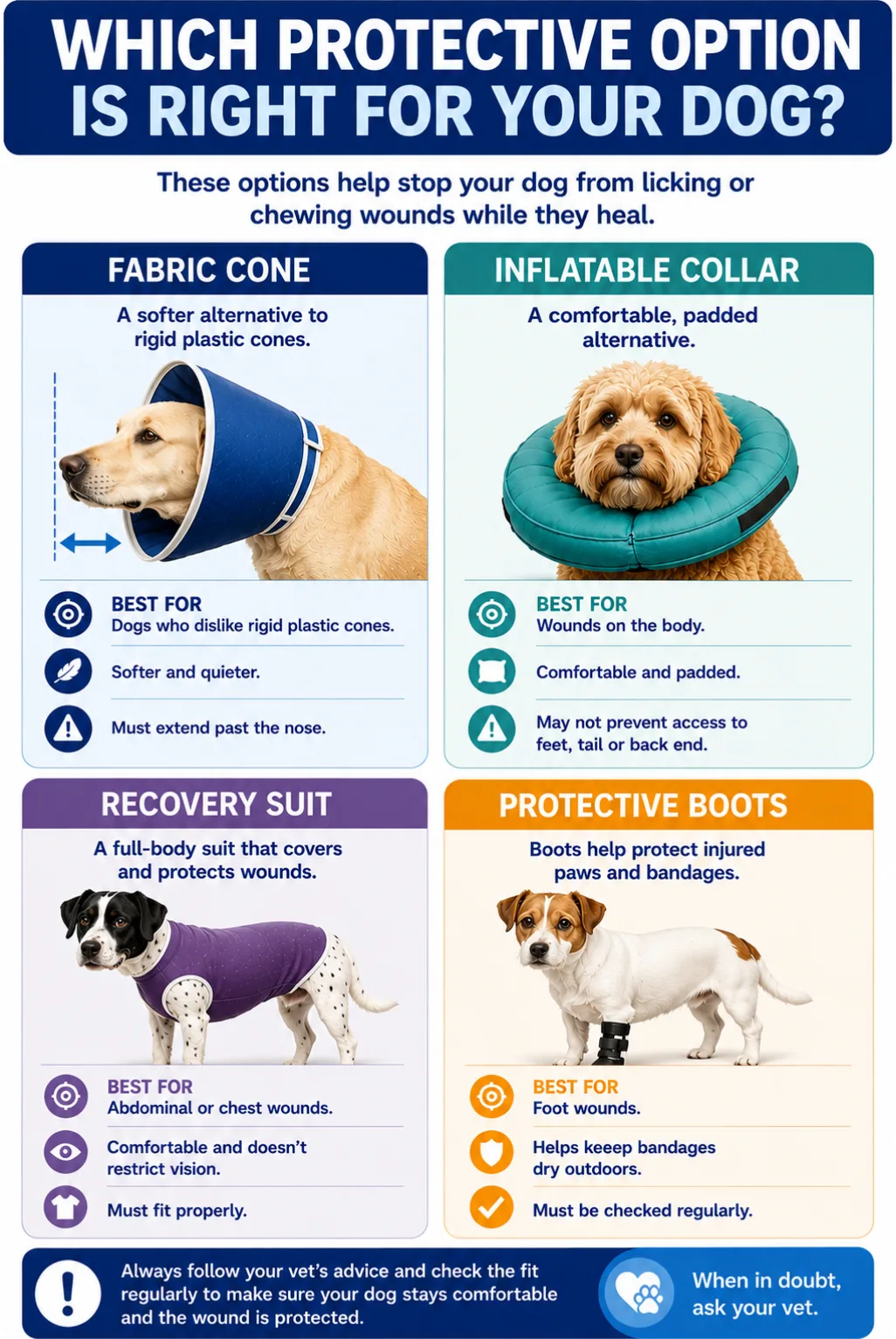
Infographic comparing four protective options for dogs recovering from wounds: fabric cone, inflatable collar, recovery suit and protective boots. It explains the best use and key considerations for each option, including that fabric cones should extend past the nose, inflatable collars may not prevent access to the feet, tail or back end, recovery suits should fit properly, and protective boots should be checked regularly.

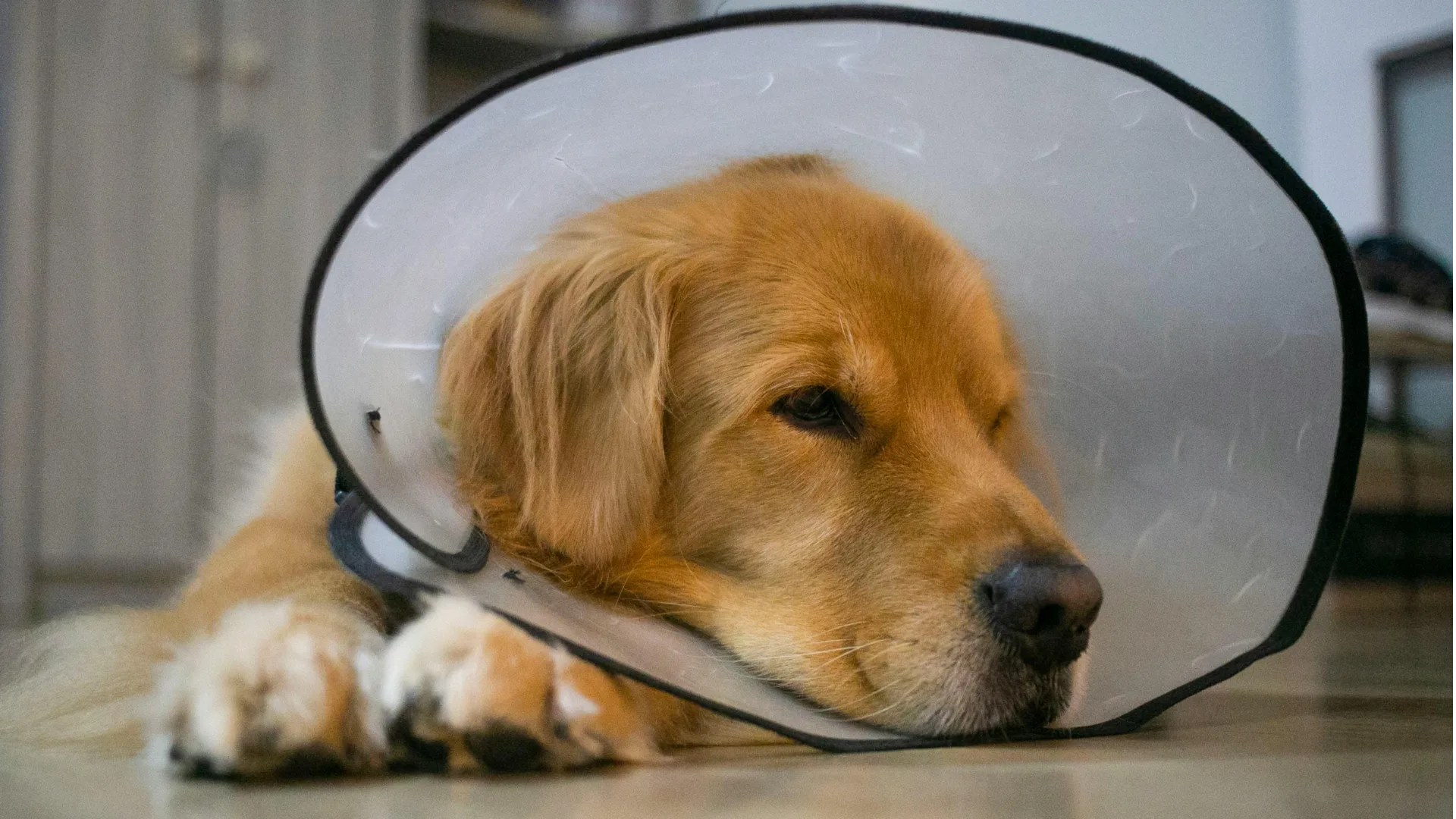
Plastic Cone/Buster Collars (Elizabethan Collars)

Best for short-term protection after surgery or procedures.

Pros

  • Very effective at preventing access to most wounds
  • Durable and easy to clean
  • Widely available from vets and pet shops
  • Some styles have padded edges for comfort

Cons

  • Can block vision
  • Bulky in small spaces
  • Dogs may bump into furniture or your legs (and it hurts!)
  • Some dogs find them stressful at first

Fitting Tips

  • Measure around your dog’s neck before buying
  • The cone should extend just past the tip of their nose
  • You should be able to fit two fingers between the cone and their neck
  • Secure it by threading their regular collar through the loops

Make sure your dog can eat and drink. Supervise them if you have to remove it briefly for meals.

Fabric Cone Collars

Best for dogs who dislike rigid plastic cones.

Pros

  • Softer and more comfortable
  • Less likely to damage furniture
  • Quieter and lighter

Cons

  • Less rigid, so determined dogs may still reach certain areas
  • Must be carefully sized

Fitting Tips

  • Measure neck circumference carefully.
  • Ensure the collar extends past the nose.
  • Tighten drawstrings securely but allow space for two fingers.

Always check your dog cannot reach the wound before leaving them unattended.

Inflatable Collars

Best for dogs needing neck support while protecting wounds on the body.

Pros

  • Comfortable and padded
  • Less obstructive to vision
  • Easier to move around the house

Cons

  • Not suitable for all wounds
  • Dogs with long noses may still reach feet, tail or back end
  • Can be punctured

Fitting Tips

  • Choose a snug size
  • Inflate fully
  • Thread your dog’s usual collar through the internal loops
  • Ensure two fingers fit between collar and neck

Check carefully that your dog cannot reach the affected area.

Recovery Suits (Medical Bodysuits)

Best for abdominal wounds, spay/neuter incisions or chest surgery.

Pros

  • More comfortable for some dogs
  • No restriction of vision
  • Good alternative to a cone

Cons

  • Must fit properly
  • Can trap moisture
  • Some dogs may chew through fabric

Practical Advice

  • Choose the correct size
  • Ensure toilet access openings are appropriate
  • Remove at least twice daily to inspect the wound
  • Keep clean and dry at all times

If moisture builds up, allow the wound to air under supervision.

Protective Boots

Best for keeping bandages dry outdoors.

Pros

  • Helps protect paws
  • Useful in wet Irish weather
  • Prevents licking of foot wounds

Cons

  • Can become sweaty if worn too long
  • May fall off if poorly fitted
  • Some dogs try to chew them

Practical Advice

  • Check sizing carefully (especially if worn over a bandage)
  • Remove regularly to allow the paw to air
  • Use a cone if your dog tries to remove it

Supervision is Key

No matter which option you choose:

  • Supervise your dog as much as possible
  • Check wounds at least twice daily
  • Contact your vet if you notice redness, swelling, discharge, missing stitches or signs of pain

Always ask your veterinary team which protective device they recommend as the safest option for your dog’s specific surgery or injury.

Choosing the right protection helps prevent complications and supports a smooth recovery.

Share

Share: