
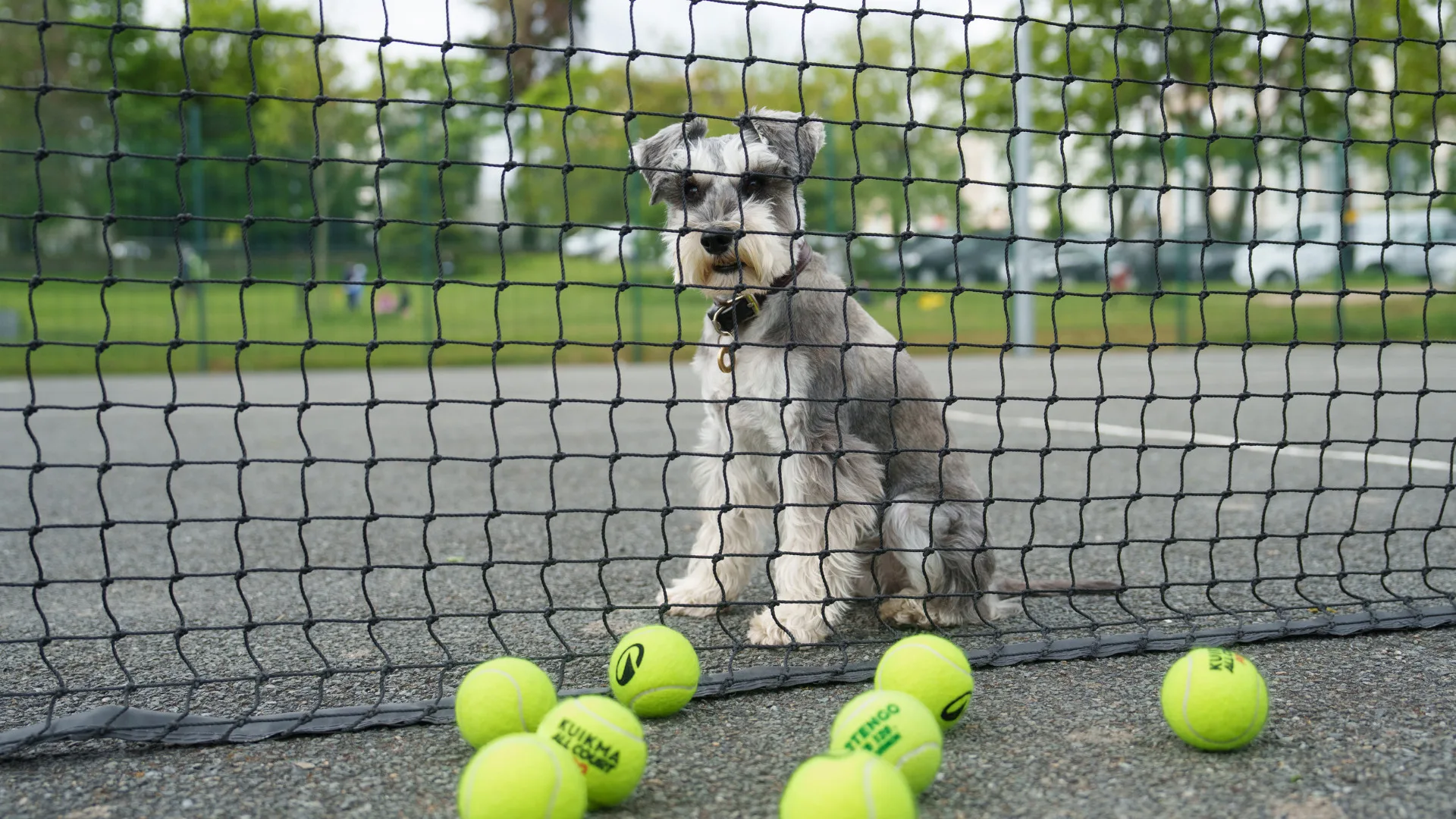
For many of us, throwing a tennis ball for a dog feels like harmless, happy fun. Unfortunately, what looks like a simple game can sometimes carry serious risks. Tennis balls aren’t designed with dogs in mind, and for some pets they can pose dangers to both physical safety and long-term dental health.
Where possible, it’s best to swap tennis balls for toys and balls made specifically for dogs, ones that are safer, more durable and kinder to their teeth.
Tennis balls are just the right size, and bounce, to cause problems, particularly for larger dogs. When a ball is caught at speed, it can slip to the back of the mouth and become lodged in the throat, blocking the airway. This is a veterinary emergency and can quickly become life-threatening.
Balls designed for dogs are usually:
Balls attached to a rope are especially useful, as they can be retrieved quickly if they slip too far back in the mouth.
For balls without a rope, choosing ones with a textured, non-slip surface and built-in air holes is important. These features help prevent the airway from being fully blocked if an accident does occur.
Because of their size and strength, large dogs are particularly at risk, and we would strongly advise against using tennis balls for them at all.
Another hidden issue with tennis balls is what they do to your dog’s teeth over time. The familiar fuzzy coating is surprisingly abrasive.
When dogs repeatedly chew or carry tennis balls, that surface acts like fine sandpaper on their teeth. Gradually, it can wear down the protective enamel, leading to blunted teeth and exposing the more sensitive layers underneath.
As enamel wears away, dogs may develop:
Once the inner pulp of a tooth becomes exposed, it can be extremely painful and requires veterinary treatment.
Dental damage isn’t the only concern. Tennis balls can also break apart, especially when chewed by strong jaws.
This can lead to:
Choking, if pieces become lodged in the throat.
Intestinal blockages, if fragments are swallowed.
Digestive upset, particularly if dyes or materials not intended for pets are ingested.
Blockages in the gut are a serious condition and often require emergency surgery.
The good news is that there are plenty of dog-friendly options that allow your pet to enjoy playtime safely.
Veterinary-approved toys to consider include:
These toys are designed to withstand chewing while protecting both your dog’s teeth and their airway.
Alongside safe toys, good dental care plays an important role in your dog’s overall wellbeing.
Helpful habits include:
If you notice changes such as reluctance to chew, drooling, bad breath, or pawing at the mouth, it’s important to seek veterinary advice.
If you’re unsure which toys are best for your dog’s size, age or chewing style, your vet or vet nurse will be happy to guide you.