
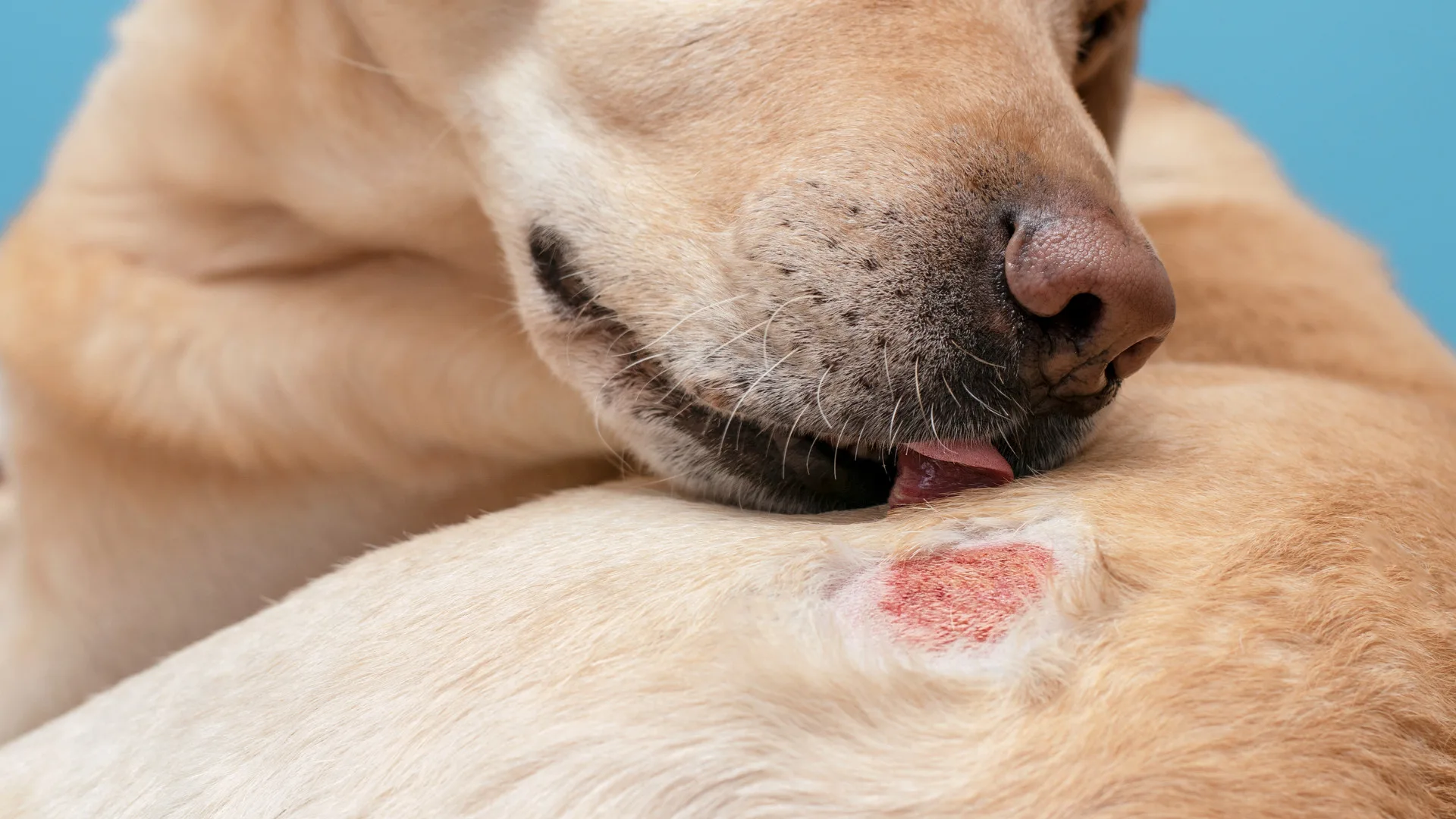
A hot spot or acute moist dermatitis is a localised area of inflamed and infected skin. It often starts as something minor, such as an insect bite, a small graze, or an itchy patch of skin. When a dog repeatedly licks, scratches, or rubs the area, the skin becomes damaged and moist, allowing bacteria to multiply rapidly.
Hot spots can develop anywhere on the body but are most commonly seen on the head, legs, hips, and sides.
If you notice a sore, red patch on your dog’s skin, it’s important to act quickly and contact your vet for advice.
Hot spots usually develop suddenly and can worsen quickly.
They may appear as:
In dogs with long or thick coats, hot spots can sometimes be hidden beneath the fur, making them harder to spot at first.
As other skin conditions can look like hot spots, it’s important to have your dog checked by a vet to ensure the correct diagnosis and treatment are given.
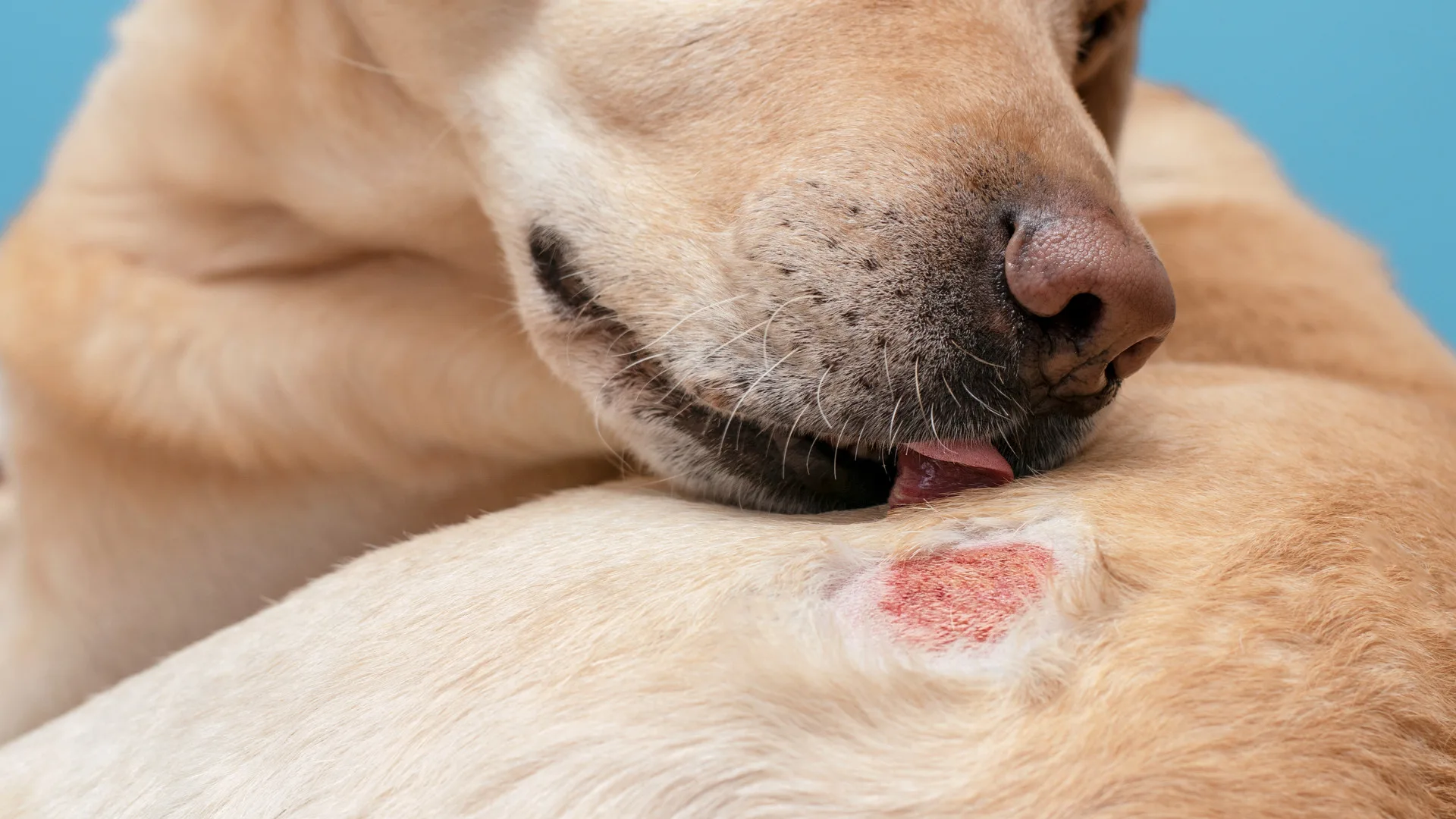
If you notice a hot spot forming, contact your vet as soon as possible. Early treatment helps reduce pain, shortens recovery time, and prevents the infection from spreading.
While waiting for your appointment, it’s very important to stop your dog from licking or scratching the area. A buster collar, protective body suit, or even a clean t-shirt can help protect the skin and prevent further damage.
Your vet will recommend treatment based on the size and severity of the hot spot. This may include:
Clipping and cleaning the affected area to allow air to reach the skin and promote healing
Medicated washes or shampoos to reduce bacteria and soothe inflammation
Topical treatments, such as sprays or creams
Medication, such as anti-inflammatory drugs or antibiotics, if needed
Preventing further irritation, usually with a buster collar or protective clothing
Not every hot spot requires antibiotics – your vet will decide what treatment is most appropriate for your dog.
If a hot spot isn’t healing as expected, it’s often because the area is still being irritated. Dogs can be very determined, so make sure they cannot reach the sore patch at any time. If you’re concerned or the area seems to be getting worse, book a follow-up appointment with your vet.
The best way to prevent hot spots is to keep your dog’s skin healthy as possible by:
Prompt treatment of skin issues can stop minor irritations from developing into painful hot spots.
Hot spots can be distressing to see, but with quick action and the right care, most dogs recover well and are soon back to their comfortable, happy selves.