

Many dogs will eat things they shouldn’t while out walking, including horse or livestock manure. While unpleasant, eating a small amount of manure will not usually make most dogs unwell.
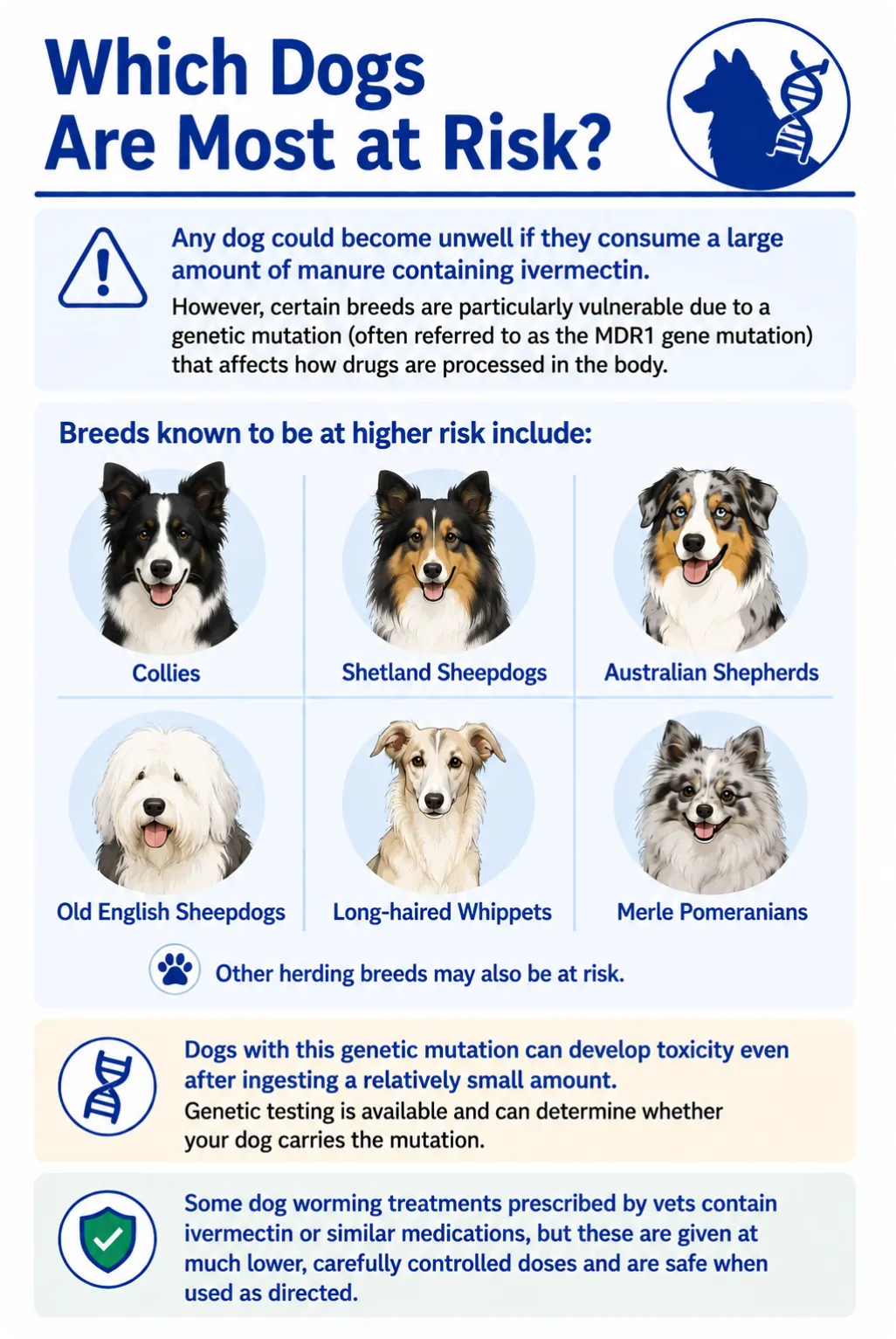
However, there is a potential risk of toxicity from chemicals used in horse worming treatments. For some breeds, even a small amount can be dangerous.
Some horse worming products contain a medication called ivermectin. This drug is highly effective at treating parasites in many species.
Horse wormers contain ivermectin at a much higher concentration than products prescribed for dogs. After a horse has been treated, ivermectin can pass into the manure and remain present for several days.
If a dog eats manure containing ivermectin, they may be exposed to a potentially toxic dose.
The level of risk depends on:
Symptoms can vary in severity and may include:
Without prompt treatment, ivermectin toxicity can be life-threatening.
If your dog has eaten horse manure and shows any of the signs listed above, contact your vet immediately.
Even if your dog seems well but belongs to a high-risk breed, it is sensible to seek veterinary advice.
Early intervention significantly improves the chances of recovery.
There is no specific antidote for ivermectin toxicity. Treatment focuses on supportive veterinary care, which may include:
The outcome depends on the amount ingested and whether the dog has a genetic sensitivity. With prompt and appropriate care, many dogs recover well.
Training plays an important role. Teaching a reliable ‘leave’ command can help prevent scavenging behaviour while out walking.
Additional steps include:
Owners of at-risk breeds should be particularly vigilant.
Horse manure ingestion is common and often harmless, but in certain circumstances it can pose a serious risk. Awareness, supervision and early veterinary advice are key to keeping your dog safe.