
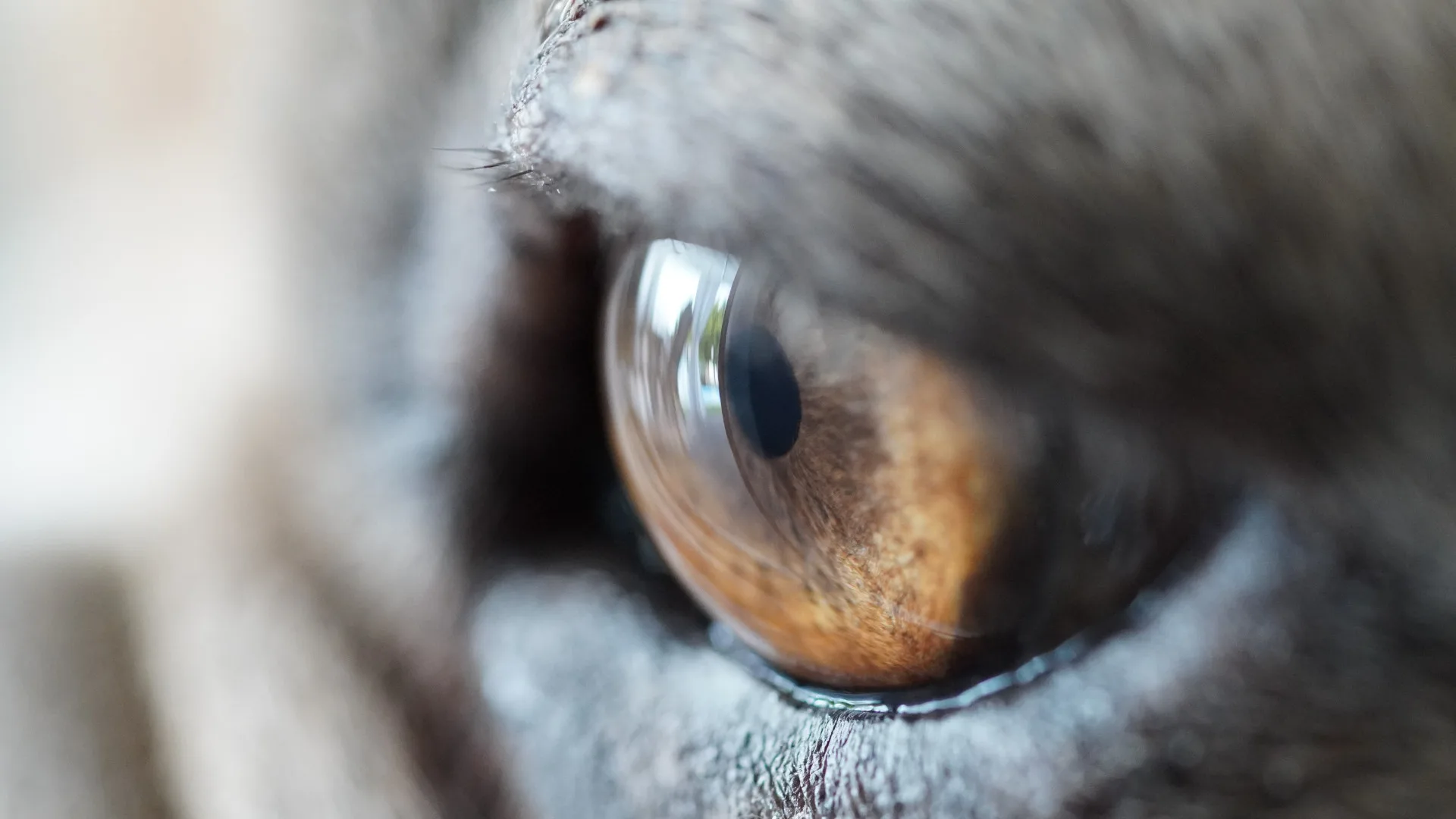
Dry eye (Keratoconjunctivitis Sicca) is a condition where a dog does not produce enough tears in one or both eyes. Tears are essential for keeping the eyes moist, comfortable, and protected. Without them, the surface of the eye becomes dry, inflamed, and very painful.
In most dogs, dry eye develops because of an immune system problem. The body mistakenly attacks and damages the tear glands, reducing tear production over time. Although the condition cannot be cured, it can usually be successfully managed, particularly when identified early.
If you notice symptoms of dry eye, contact your vet as soon as possible.
Eye problems can worsen quickly and should never be ignored.
Most cases are immune-mediated, meaning the immune system gradually destroys the glands responsible for producing tears. This damage typically happens over months or even years.
Less commonly, dry eye may be linked to:
If untreated, dry eye can lead to:
Dry eye usually develops gradually and often affects both eyes, although one may appear worse initially.
Common signs include:
Arrange a veterinary appointment immediately if you suspect dry eye. Even if symptoms seem mild, prompt treatment is important. Eyes are delicate structures, and delays can lead to permanent damage.
Dry eye is diagnosed using a simple test called a Schirmer Tear Test. During this procedure:
The test is quick and generally well tolerated.
Dry eye usually requires lifelong management and regular monitoring.
Although damaged tear gland tissue cannot be restored, certain medications can reduce immune attack and preserve remaining function.
In advanced cases where tear glands are destroyed, medication may no longer be effective.
Lubricating drops or gels replace missing tears and protect the eye surface.
They are initially needed frequently (sometimes every 1–2 hours) but once stable, application may become less frequent
Consistency is crucial for comfort and protection.
Keeping the eyes clean helps prevent infection:
If medical treatment fails, surgery may be considered.
A parotid duct transposition redirects a salivary duct, so saliva keeps the eye moist instead of tears. This can be effective, but saliva may irritate the eye or surrounding skin. For this reason, it is typically considered a last resort.
In severe cases where pain cannot be controlled, removal of the affected eye may be recommended.
Many dogs adapt extremely well to the loss of an eye, especially if they are already blind. The main goal is to relieve pain and restore quality of life.
When diagnosed early and treated consistently, many dogs respond well and live comfortable lives for years.
If treatment does not control the condition, surgical options may be necessary. In cases where pain cannot be managed, difficult decisions about welfare may need to be discussed with your vet.
Dry eye is often inherited, making it more common in certain breeds, including:
As most cases are inherited, dogs diagnosed with dry eye should not be bred from.
If you are choosing a puppy, research the breed carefully and ask breeders about hereditary eye conditions.
Dry eye can become costly due to lifelong medication and check-ups. If you’re able to, consider pet insurance while your dog is young and healthy to help with unexpected illness or injury. If your dog becomes unwell, talk openly with your vet about the options, the likely costs, and what feels manageable for you. Together, you can tailor a plan that’s right for your dog and your situation.