
Vision loss in dogs can happen gradually over time or appear very suddenly and the way your dog adapts often depends on how quickly the change occurs.
Dogs that lose their sight slowly are usually very good at adjusting, which means early signs can be easy to miss. Sudden blindness is far more noticeable and can be distressing for both dogs and their owners.
There are many possible causes of blindness. Some can be treated, while others are permanent. If you suspect your dog is having difficulty seeing, contact your vet promptly.
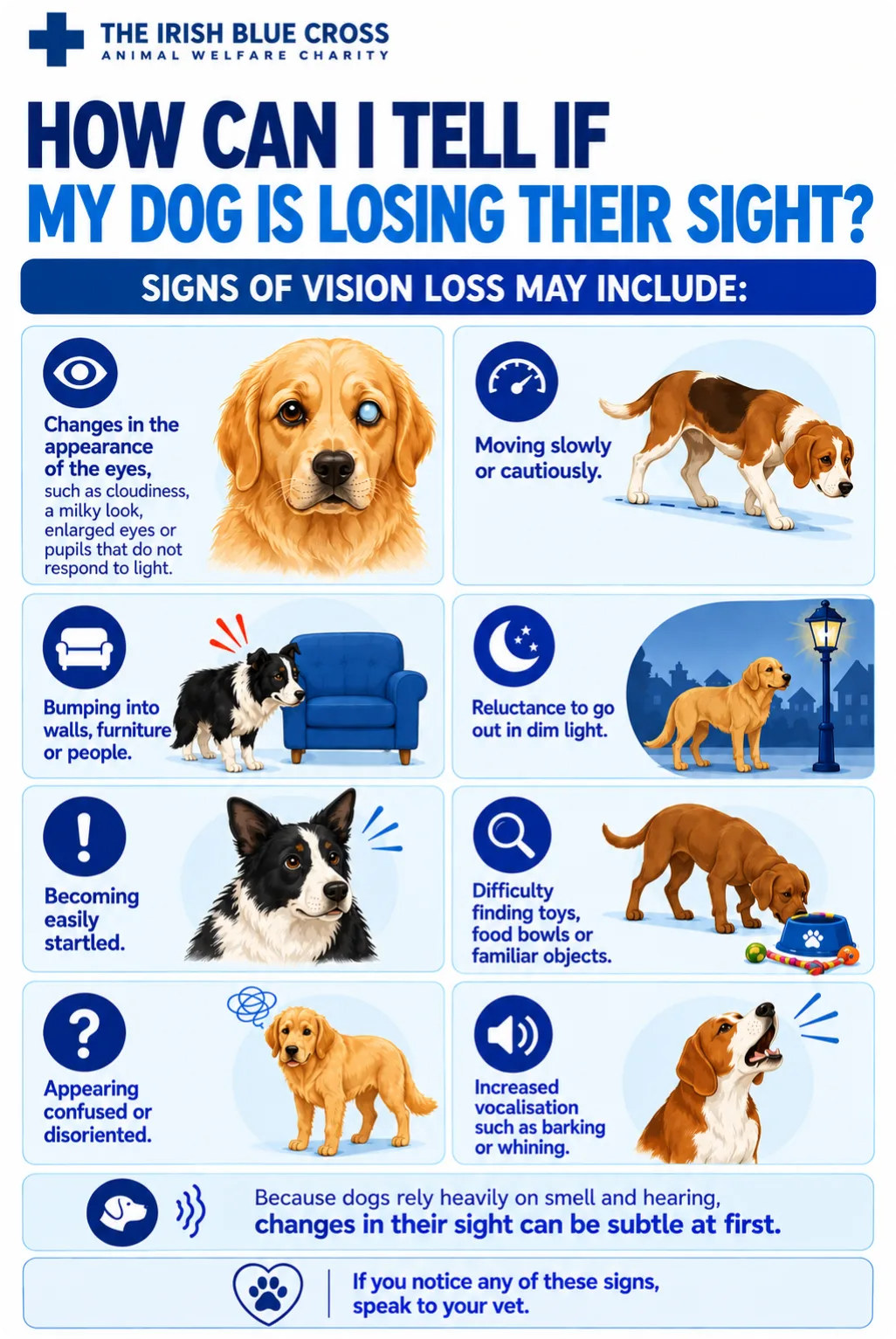
When sight declines slowly, dogs often adapt very well. You may notice small behavioural changes such as hesitating on stairs, struggling in unfamiliar places or finding low light conditions difficult.
With time and support, many dogs with gradual vision loss continue to enjoy a full and active life.
Sudden blindness is much more obvious. Dogs may seem frightened, disoriented or anxious. Rapid changes in sight always require urgent veterinary assessment, as some causes are painful or require immediate treatment.
Your dog’s quality of life and available treatment options should be discussed carefully with your vet.
Blindness can result from problems affecting the eye itself, the optic nerve or the brain.
Common causes include:
Clouding of the lens inside the eye which are common in older dogs and dogs with diabetes.
Increased pressure within the eye, which is painful and can lead to permanent damage.
Inflammation inside the eye.
Problems affecting the back of the eye, such as retinal detachment, sudden acquired retinal degeneration syndrome or progressive retinal atrophy.
Diseases that interrupt signals between the eye and brain.
Strokes, tumours or infections affecting visual processing.
Conditions such as diabetes can contribute to vision loss.
Trauma or growths affecting eye structures.
Certain breeds are predisposed to inherited eye conditions:
If you own a breed prone to eye disease, regular eye checks are especially important.
Your vet will examine your dog’s eyes carefully and this may include:
Prompt diagnosis can improve treatment options and comfort.
Whether blindness can be treated depends on the cause. Some conditions, such as certain cataracts or inflammatory diseases, may respond to medical or surgical treatment. Others, particularly degenerative conditions, may be permanent.
If an eye is blind and painful, your vet may recommend enucleation, which is the surgical removal of the eye, to relieve discomfort and improve your dog’s quality of life.
Your vet will guide you based on your dog’s individual condition.
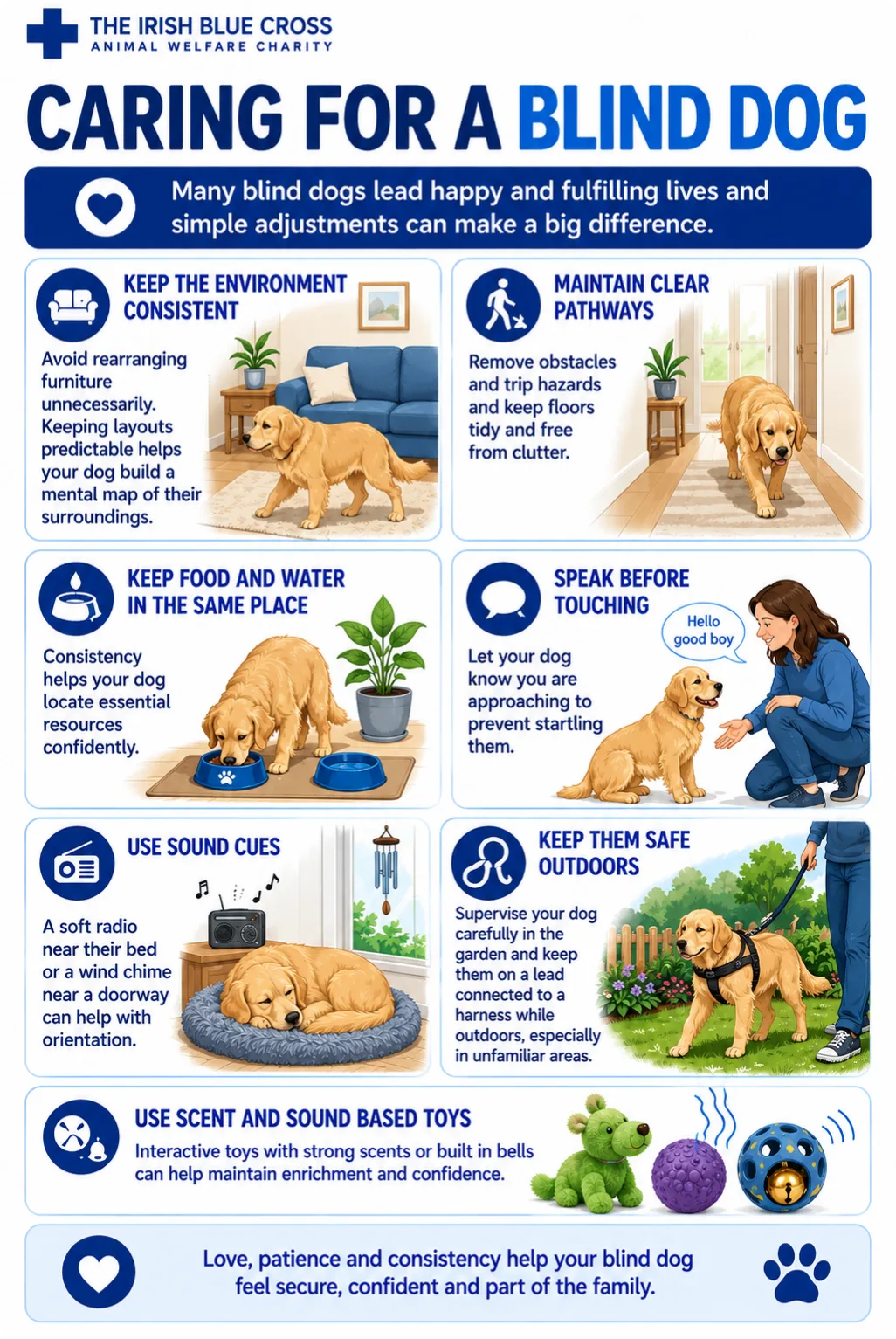
Your dog’s long-term outlook depends on the underlying cause and how well they adjust.
Dogs that lose sight gradually often cope extremely well as sudden blindness can be disorientating and very stressful.
Please seek veterinary advice if:
Eye problems can worsen quickly, and early treatment can prevent complications.
Eye investigations and treatment can involve specialised equipment and referral to an eye specialist, in some cases. Costs vary depending on the cause and treatment required.
If you’re able to, consider pet insurance while your dog is young and healthy to help with unexpected illness or injury. If your dog becomes unwell, talk openly with your vet about the options, the likely costs, and what feels manageable for you. Together, you can tailor a plan that’s right for your dog and your situation.