
Pet Loss Support Helpline – call 1800 83 99 54 for support and guidance, or find out more.

Exercising Your Cat

Cats love to sleep, in fact, most cats snooze for around 15 hours a day (and sometimes even more!). But regular exercise is still essential for their physical and mental wellbeing.

Staying active helps reduce the risk of:

  • Obesity
  • Diabetes
  • Arthritis
  • Behaviour problems linked to boredom

Play and movement also allow cats to express natural hunting behaviours, keeping them happier and more relaxed. Best of all, interactive play is a wonderful way to strengthen your bond.
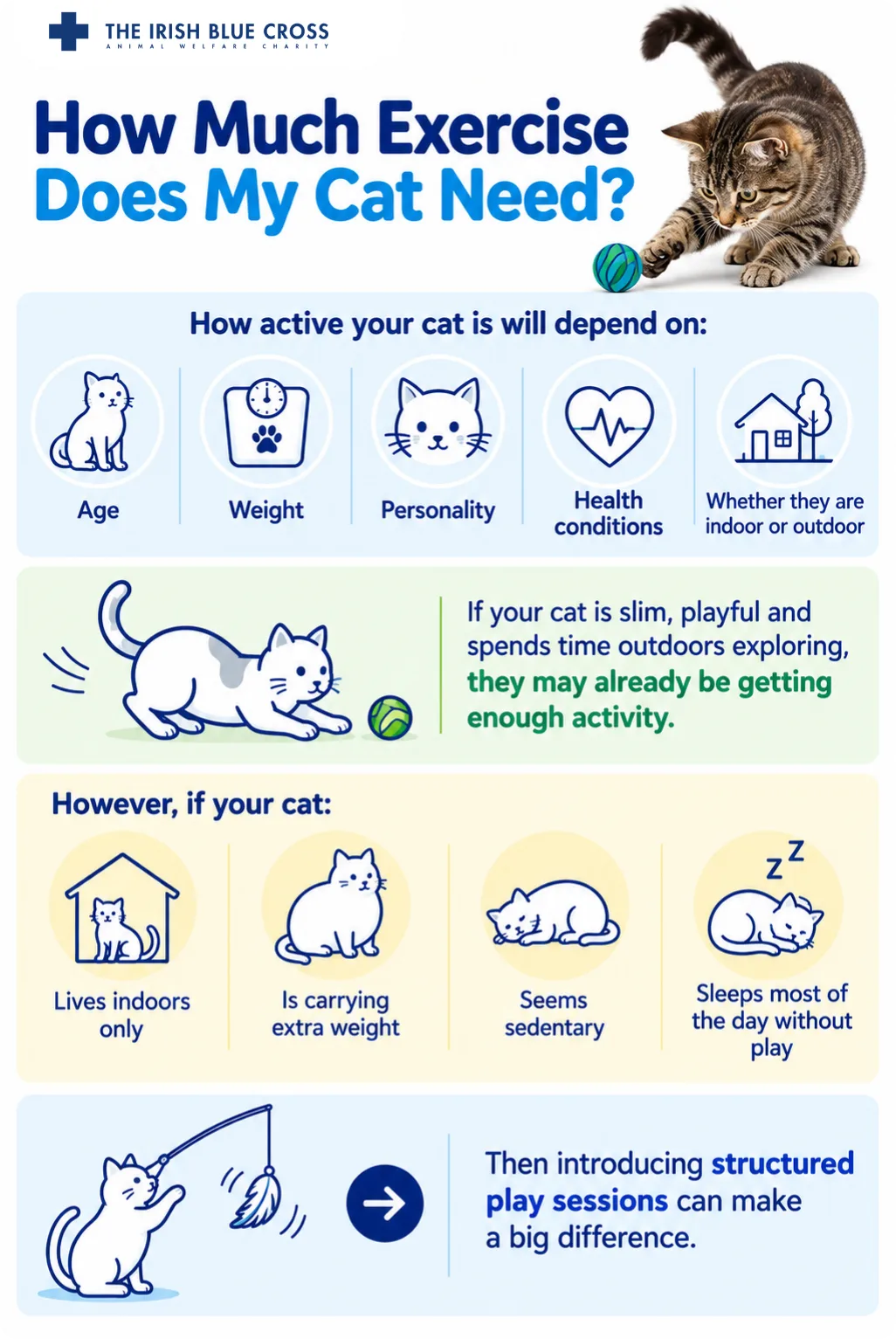
Infographic titled “How Much Exercise Does My Cat Need?” explaining that a cat’s activity needs depend on age, weight, personality, health conditions and whether they are indoor or outdoor. It notes that slim, playful cats who spend time outdoors may already get enough activity, while indoor cats, overweight cats, sedentary cats or cats that sleep most of the day without playing may benefit from structured play sessions. Illustrations show cats playing with toys, resting, and engaging in interactive play. Irish Blue Cross branding appears at the top.

A Good Starting Point

Aim for two 15–20 minute play sessions per day which you can gradually increase as your cat becomes fitter.

Keep sessions short and always allow rest breaks. Never force your cat to play.

The Best Way to Exercise Your Cat: Play

In the wild, cats get most of their exercise from hunting. We can recreate this by encouraging chasing and pouncing games at home.

Top Play Tips

  • Offer a variety of toys to discover preferences
  • Rotate toys every few days to prevent boredom
  • Avoid using fingers or toes for play (this can encourage biting)
  • Play during early morning or evening, when cats are naturally most active
  • Let your cat ‘catch’ the toy regularly to prevent frustration

Exercising Indoor Cats

Indoor-only cats need extra encouragement to stay active, as they miss out on outdoor exploration.

Without stimulation, boredom can lead to:

  • Scratching furniture
  • Climbing curtains
  • Rough play with humans
  • Overeating

Make Your Home Cat-Friendly

  • Provide vertical spaces such as cat trees or shelves
  • Create hiding spots and resting platforms
  • Offer climbing opportunities

Provide Scratching Options

Indoor cats benefit from multiple scratchers in different materials:

  • Sisal
  • Cardboard
  • Wood
  • Carpet

Controlled Outdoor Access

If possible, consider:

  • A secure ‘catio’ (enclosed patio area)
  • Specialist cat-proof fencing

Infographic titled “Toy Ideas to Encourage Exercise” explaining different ways to encourage cats to exercise and stay mentally stimulated. Suggestions include lightweight balls for batting and chasing, teaser toys for jumping and stalking, motorised or chase toys to stimulate hunting instincts, fetch toys, cat trees and tunnels for climbing and hiding, scratching posts, and puzzle feeders that encourage cats to work for their food. A warning section advises avoiding wool, string, thread or twine because they can cause intestinal blockages if swallowed, and not using laser pointers or screen games as the only form of play. If using a laser toy occasionally, owners should finish with a physical toy the cat can catch. The graphic features photographs and illustrations of cats playing with different toys.

Outdoor Cats

Cats with outdoor access typically get more natural exercise through exploring and hunting.

However, indoor play remains important for:

  • Mental stimulation
  • Bonding
  • Additional exercise during poor weather

Even outdoor cats benefit from daily interaction.

Exercise for Kittens

Kittens are naturally energetic and need frequent play to:

  • Build strong muscles
  • Develop coordination
  • Learn hunting and climbing skills

Short, frequent play sessions throughout the day are ideal.
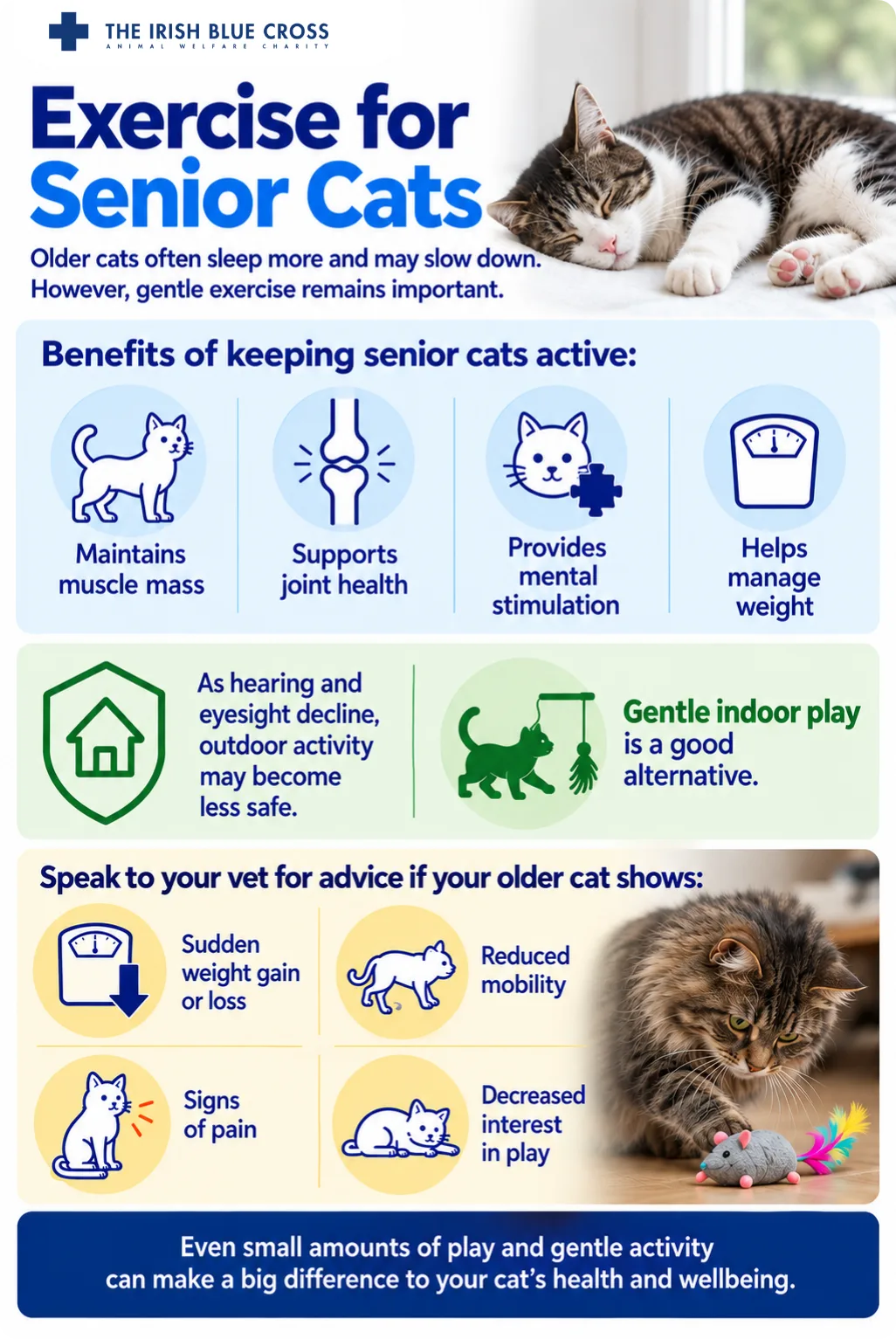
Infographic titled “Exercise for Senior Cats” explaining that older cats may sleep more and slow down, but gentle exercise remains important. It highlights benefits of staying active, including maintaining muscle mass, supporting joint health, providing mental stimulation and helping manage weight. It advises that indoor play can be a safer alternative as hearing and eyesight decline. Signs that may require veterinary advice include sudden weight gain or loss, reduced mobility, signs of pain and decreased interest in play. The Irish Blue Cross logo appears at the top.

Summary

All cats, young or old, indoor or outdoor, need regular opportunities to move, play and explore.

Exercise helps keep your cat:

  • Physically fit
  • Mentally stimulated
  • Emotionally content

A few short play sessions each day can significantly improve your cat’s health and strengthen the bond you share.

If you’re ever unsure about your cat’s weight, activity levels or mobility, contact your vet for guidance.

Share

Share: