
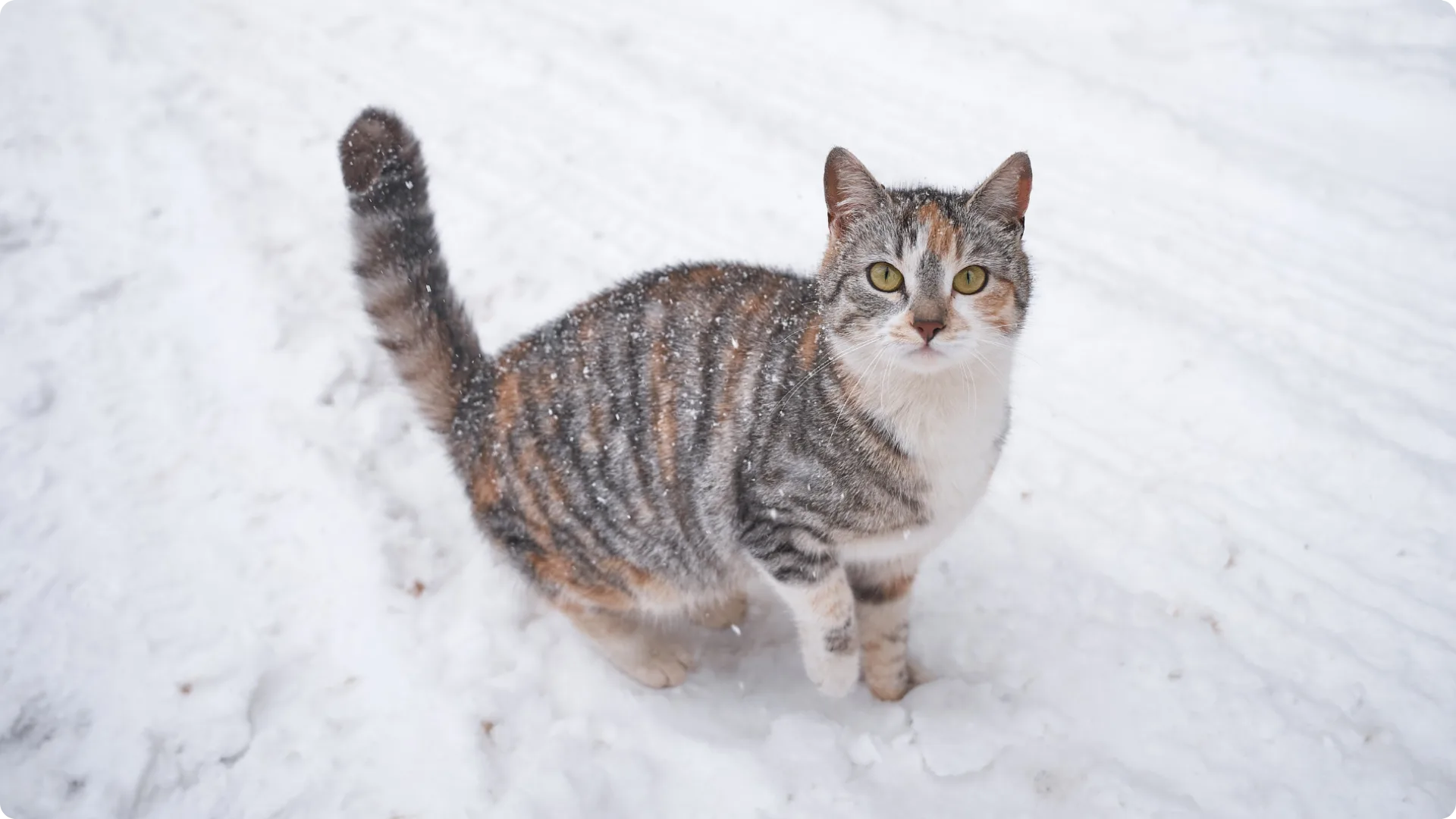
Cold weather can bring extra risks for cats. As temperatures drop, it’s important to take steps to keep your cat warm, safe and comfortable.
Yes, cats can feel the cold, particularly during prolonged cold spells. In very low temperatures, cats are at risk of hypothermia and frostbite.
Some cats are more vulnerable than others, including:
These cats may need extra warmth and closer monitoring during winter.
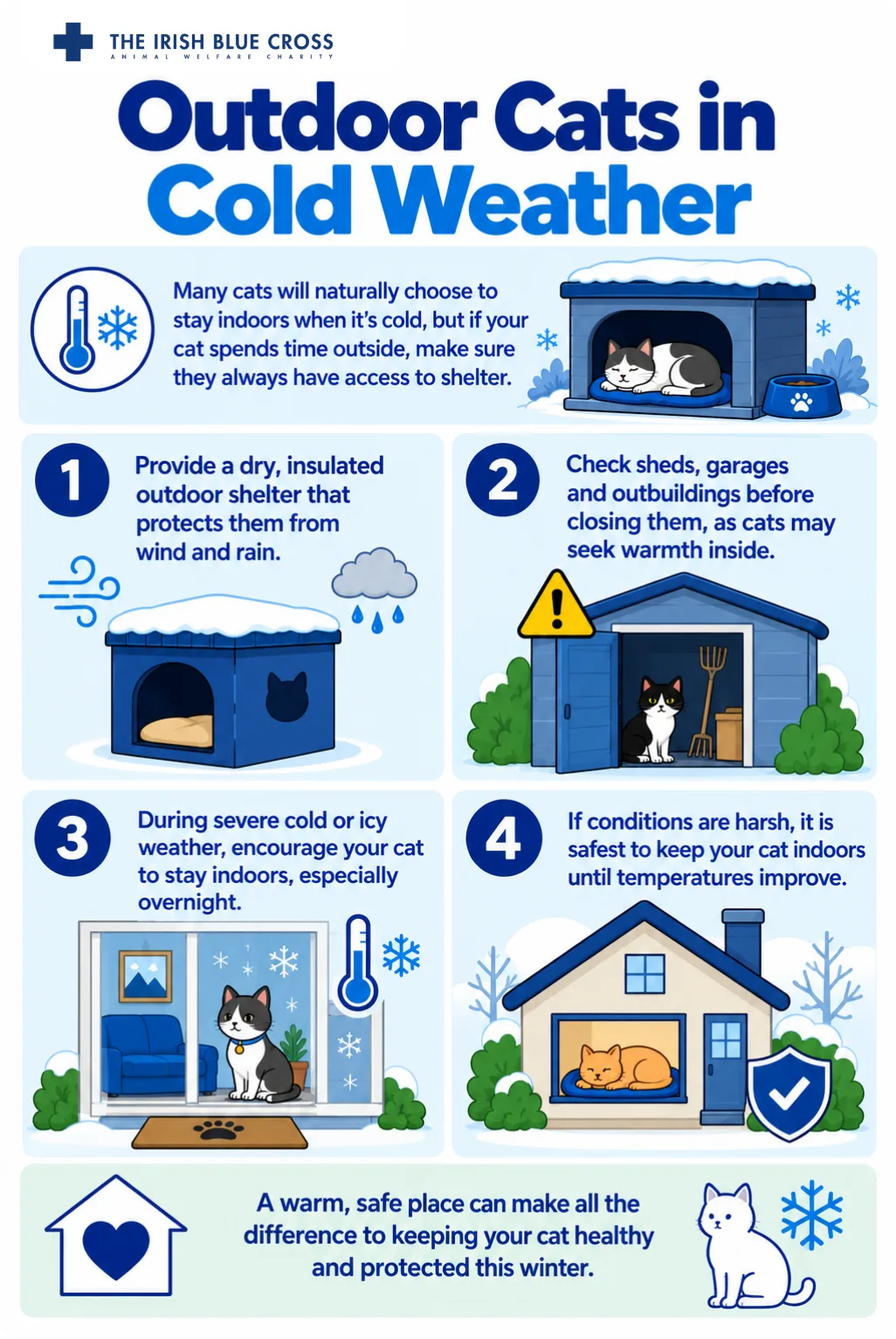
Even indoor cats can feel the chill in winter.
You can help by:
Pet-safe microwavable heat pads placed under blankets can help keep beds warm. Avoid electric blankets, as these can cause burns or pose a chewing hazard.
Winter brings additional outdoor dangers, including:
Always check under the bonnet and give it a firm tap before starting your car. If very cold or stormy weather is forecast, it’s safest to keep your cat indoors and not leave them outside overnight.
Cold weather may limit outdoor activity, which can leave cats bored or restless. Indoor enrichment is important to keep them mentally and physically stimulated.
Staying active indoors can also help your cat keep warm during colder days.
Antifreeze is extremely dangerous to cats. Even a tiny amount can cause severe kidney damage and can be fatal.
Cats may be exposed by:
You can reduce the risk by:
Signs can appear quickly and may include:
If you suspect antifreeze exposure, contact your vet immediately. Do not wait for symptoms to appear, as early treatment is critical.
During snowy or icy weather, roads and paths are often treated with salt or grit. These substances can irritate paws and are toxic if swallowed.
Winter and festive decorations can bring additional risks:
Please contact your vet immediately if you think your cat has eaten something dangerous.