

For many dogs, there’s nothing more exciting than spotting a stick on a walk. Chasing it, carrying it proudly, or settling down for a good chew can seem like harmless fun.
Unfortunately, sticks can pose a real risk to dogs, and injuries caused by them are more common, and often more serious, than many people realise.
The good news is that there are much safer ways to keep your dog happy, active and entertained.
Sticks vary hugely in size, shape and weight, which makes them unpredictable when thrown. They can bounce, splinter or land at awkward angles, increasing the chance of injury as your dog runs to grab them.
Many sticks also have sharp ends, rough edges, thorns or smaller branches attached. When combined with an excited dog running at speed, this can quickly turn playtime into an emergency.
Whether your dog is fetching or chewing a stick, injuries can range from minor to life-threatening.
These may include:
Veterinary teams regularly treat dogs like Hulk (pictured above) with serious stick-related injuries. In some heartbreaking cases, the damage is so severe that dogs cannot be saved. What looks like a simple game can have devastating consequences.
Why Do Some Dogs Love Sticks so Much?
Sticks are appealing because they engage several of a dog’s senses at once. They smell interesting, have different textures, and can feel satisfying to chew.
However, allowing dogs to chew sticks can quickly become a lifelong habit that’s difficult to break, and one that carries ongoing risks.
If your dog enjoys chasing and carrying objects, there are plenty of safer options to choose from.
For games of fetch:
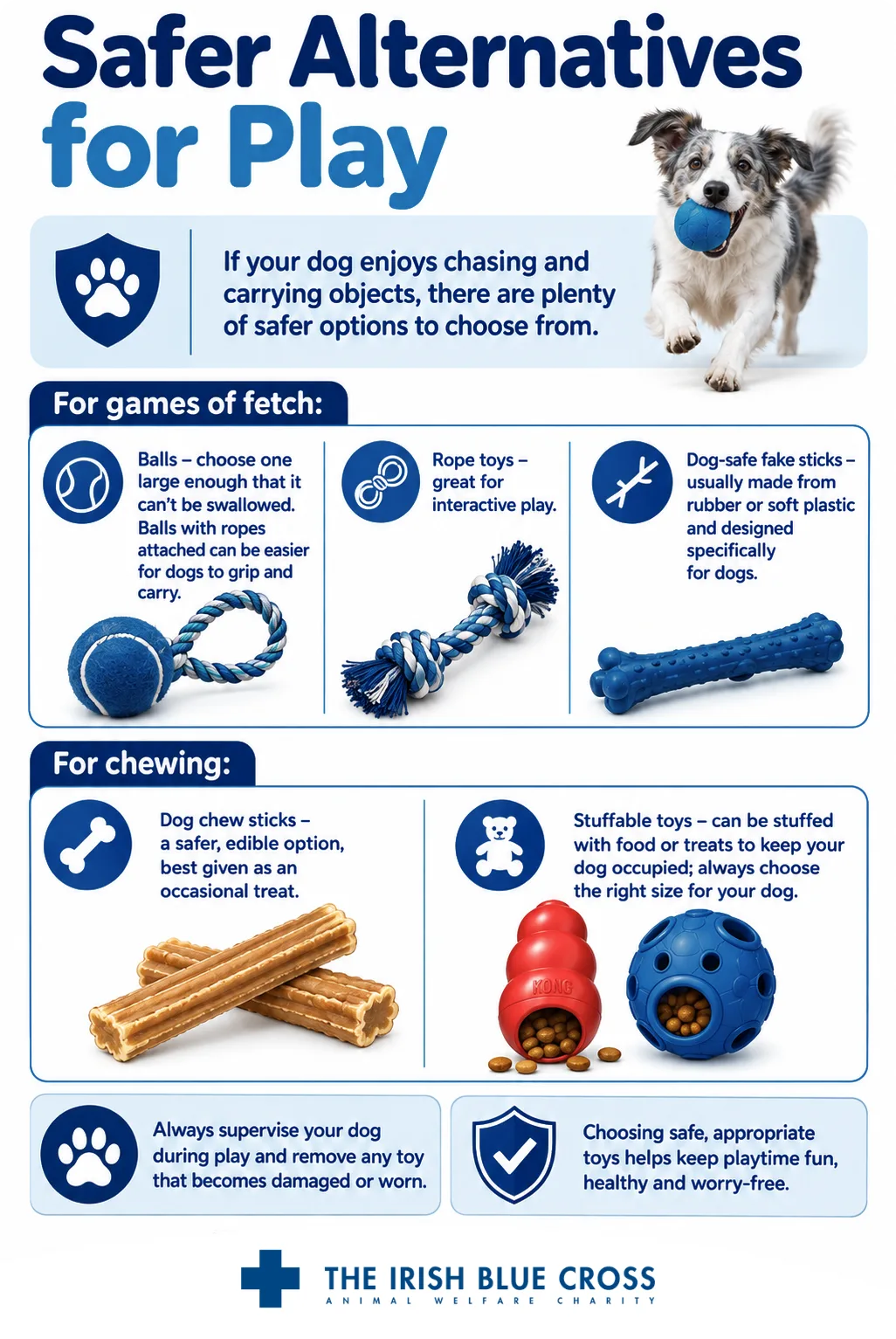
Sticks may seem natural and harmless, but the risks they carry simply aren’t worth it. By choosing safer toys instead, you can still give your dog all the fun they love while reducing the chance of painful, and potentially life-threatening injuries.
If you’re ever unsure about a toy or worried your dog may have injured themselves, it’s always best to contact your vet for advice.