

Anal gland abscesses are a painful but fairly common problem in dogs. They happen when a pair of small scent glands near your dog’s bottom become blocked and infected. If left untreated, the pressure can build up, and the abscess may burst through the skin.
These abscesses are extremely uncomfortable, so it’s important to contact your vet as soon as you suspect there’s a problem. Trying to treat an anal gland abscess at home can cause serious pain and damage, so professional care is always needed.
Dogs have two small anal glands that sit just inside the anus. They produce a strong-smelling fluid that dogs use to mark territory. In healthy dogs, this fluid is released naturally when they pass a stool.
Sometimes, however, the glands don’t empty properly. When this happens, the fluid thickens and builds up, allowing bacteria to grow. Over time, this can lead to swelling, infection and eventually an abscess.

You should contact your vet as soon as possible if you think your dog has an anal gland abscess. These infections can worsen quickly, and early treatment helps reduce pain and speeds up recovery.
Treatment depends on how sore the area is and whether the abscess has already burst.
If the abscess is very painful, your vet may start by prescribing anti-inflammatory medication for pain relief and, in some cases, antibiotics to help clear the infection. Anal glands that are badly infected are often too painful to empty straight away.
If the abscess has already burst, it may actually be less painful, as the pressure has been relieved. In these cases, antibiotics are not always needed, but careful cleaning is essential while the area heals.
Your vet will usually clip and clean the area and show you how to keep it clean at home. This typically involves gently bathing the area with warm salty water using cotton wool, especially after your dog goes to the toilet. Most dogs will also need to wear a protective collar to stop them licking the wound, as this can introduce more bacteria and delay healing.
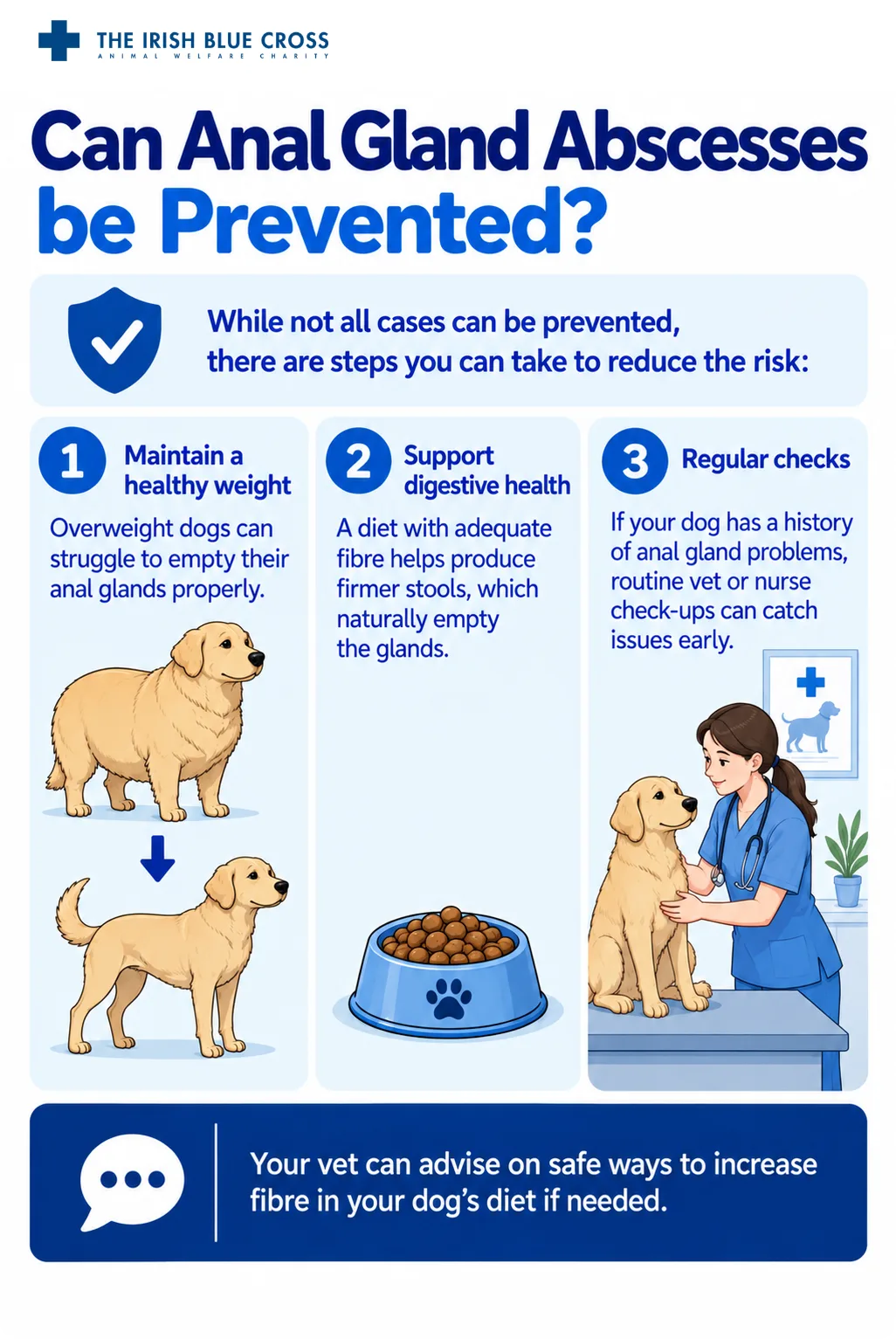
Some dogs are prone to ongoing anal gland issues, so your vet may recommend further steps, such as:
Surgery is usually considered a last resort, as procedures around the anus carry a higher risk of complications.
Most anal gland abscesses heal well within a week once proper treatment has started, provided the area is kept clean and there are no complications. Dogs with recurring issues often do well with ongoing management and regular veterinary support.
The cost of treating an anal gland abscess varies depending on how severe the problem is and what treatment is required.
If you’re able to, consider pet insurance while your dog is young and healthy to help with unexpected illness or injury. If your dog becomes unwell, talk openly with your vet about the options, the likely costs, and what feels manageable for you. Together, you can tailor a plan that’s right for your dog and your situation.